Tag Archives: the power of thought

Chuck’s Place: The Good & Bad Of Habit

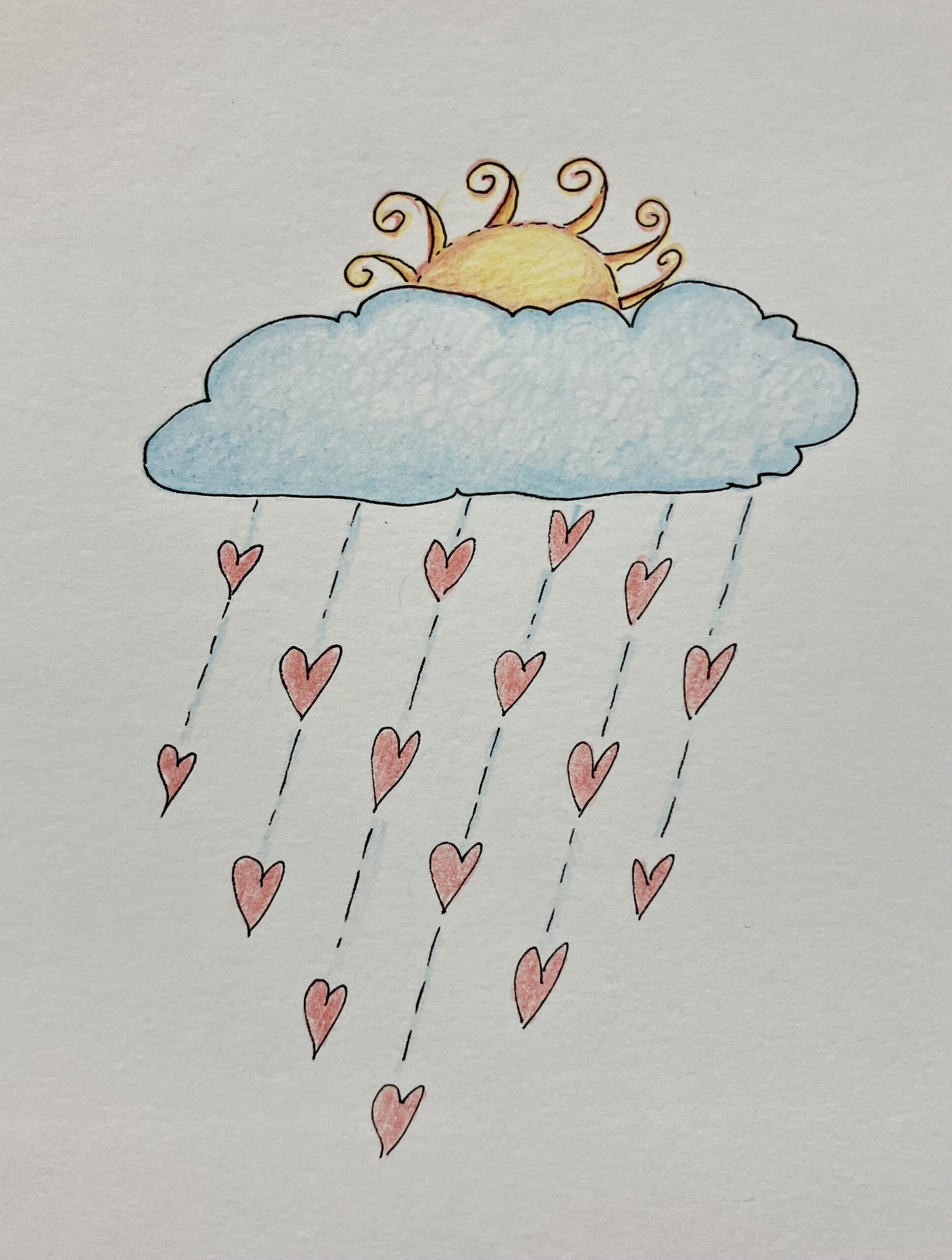
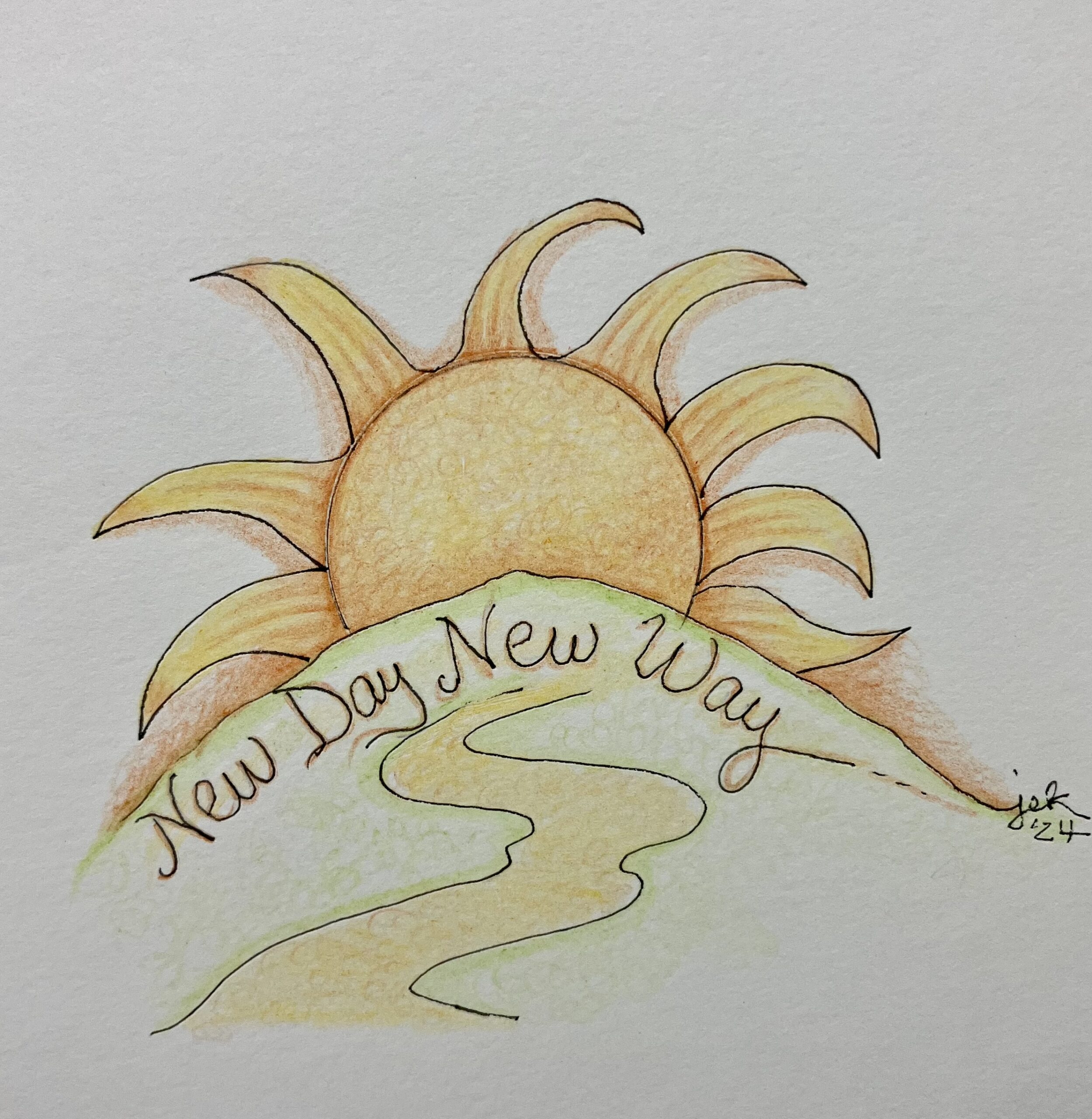
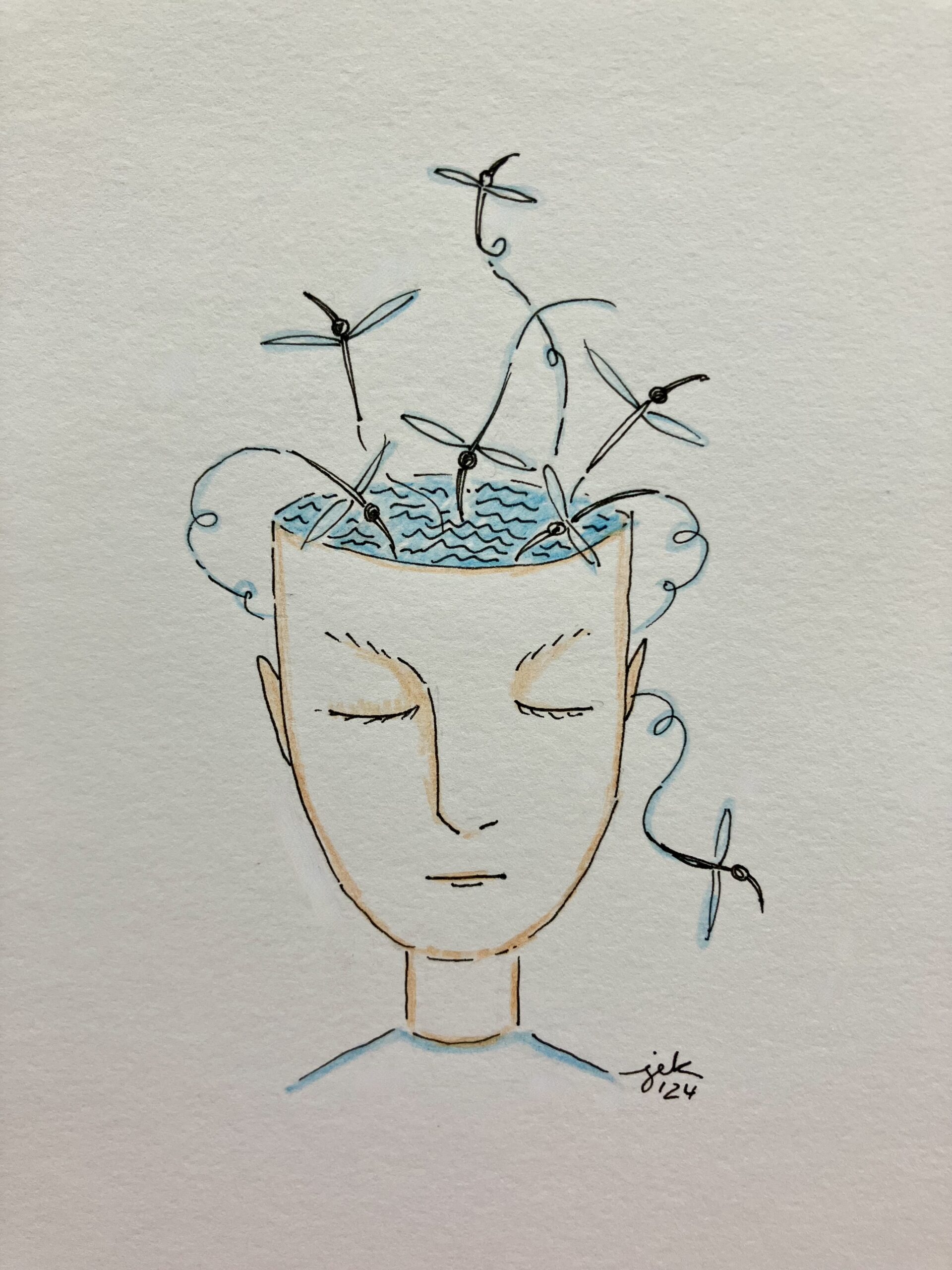
-Artwork © 2024 Jan Ketchel

From a biological point of view, a habit is a well-connected cluster of brain cells (neurons) that form a circuit that, when turned on, directs the body and mind to automatically behave in a certain way. Many habits are inherited through the arrangement of genes in our DNA, and many are formed epigenetically, as we learn new things post-birth.

A distinguishing characteristic of a habit is that it operates outside of consciousness. Our body is frequently prompted to perform habits while the attention of our conscious mind is far away, in thought. Think about driving and suddenly noticing that you have arrived at your destination with little memory of the journey.

Habits are housed in the subconscious mind, which pairs the suggestions it receives through sensory triggers with its storehouse of habitual responses. The subconscious largely runs all the systems of our body independently of our awareness.

Habits are the building blocks of our identity. When we awaken from our night sea journey of sleep, we are quickly swept away from dreamland and placed into the familiar story of who  we are in waking life. Thoughts of our upcoming day become the triggers of our mental habits that tell us who we are.

“What is the time? Oh, I always wake up late, I never give myself enough time (depressed feeling). I won’t have time to eat (sad). I’ll grab a coffee at the gas station because, of course, I didn’t fill up yesterday because I was lazy, as usual (defeated). Oh! I have that meeting today; I hate presenting (anxiety). I feel so judged by my peers, especially by her, Miss Perfect (failure). I hate this job, but I’m stuck (not good enough)…”

We think about 60,000 thoughts a day, 90% of which are habitual. This string of thought-triggers, that begins upon awakening, becomes a nonstop internal dialogue that solidifies our sense of who we are, providing us with our familiar identity. Whether we like ourselves or not, we find comfort in the secure grounding and dependability of our habitual definition and feeling of self.

The good news, from a neurological point of view, is neuroplasticity, the capacity of the brain to establish new neural networks, and consequently, new habits. New thoughts can be consciously chosen, which, when repetitively stated and imbued with imagination and emotion, provoke the subconscious to manifest a new identity and a new physical reality.  (See link below.)

The brain treats our thoughts as actual reality. When we imagine something in our minds, the brain creates new circuits of neurons and chemical reactions that build new physical structures and emotions in the body, in accordance with the model we mentally create. When the mind rehearses its desired future, the brain builds the structures to make it physically happen.

The challenge to suggesting new thoughts to the subconscious, as Dr. Joe Dispenza points out, is that we must allow ourselves to be uncomfortable with change. Our attachment to the comfort of our familiar, known, habitual self generates defenses to protect its prior habitually-established neurocircuitry.

Subjectively, this is experienced as doubt and lack of faith in the ability to truly transform the self, mentally and physically. The tendency is to continue to place emphasis on the known, reinforcing the hegemony of the old circuitry. As Christ pointed out, without faith there are no miracles. He was not talking about faith in him but faith in the ability of the self to truly transform. That’s the suggestion necessary to get the attention of the subconscious.

The nuts and bolts of transformation is rote practice, continued over time. Say something enough times with passion, while imagining it, and it will come to pass. That’s exactly how the inner dialogue already works: we become what we think. If we take conscious control of directing our thoughts, we change our brain and we change who we are.

The challenge is both perseverance and a willingness to live in the discomfort of a fluid rather than a fixed identity. To grow, in its fullest potentiality, is to arrive at the perspective of all that is, better known as, the ultimate experience of cosmic oneness.

At the gross motor level of the physical body, the shamans of ancient Mexico used not-doings to break the fixation of habitual behavior, awakening consciousness to be able to choose new behaviors. A not-doing might be to change your bedtime every night or to wear mismatched socks during the day. Spontaneous decisions, like breaking into singing and dancing or choosing a different turn while driving, disrupt habit and awaken consciousness.

Life in Earth School paradoxically requires us to establish a uniformity of identity through a habitual self to feel safe and grounded, yet it also insists that we constantly break old habits of self in order to grow.

Life in Graduate Earth School asks us to wake up and be the rising sun each morning, like the phoenix burning off the habitual self of just yesterday, as we journey further into the adventure and discomfort of the unknown in a new day.

Nothing can ever stay the same. Habits are all temporary perches from which to observe and discover infinity. Enjoy them, learn from them, but don’t get too attached, as more of infinity awaits!

Not Doing,
Chuck

Sharing a good meditation to support a changing self, created by Dr. Joe Dispenza. I suggest listening to it in its entirety, many times, for the fullest experience.
You are the Placebo-Guided Meditation

Soulbyte for Tuesday September 24, 2024

-Artwork © 2024 Jan Ketchel

Strong intentions or mantras repeated numerous times throughout the day, like prayers, have a profound effect upon the human body, mind and spirit. Healings take place, shifts occur, and magic happens. Don’t be afraid to implement such practices. Don’t be afraid of change. There is only good to come of it all, especially the unexpected, the unimagined, the unforeseen good that is perfect for you. Trust yourself, your ability to enact change, and trust the Universe as it supports and guides you. Expect good and good will come.

Sending you love,
The Soul Sisters, Jan & Jeanne

Chuck’s Place: The Royal Spheres Of The One Mind

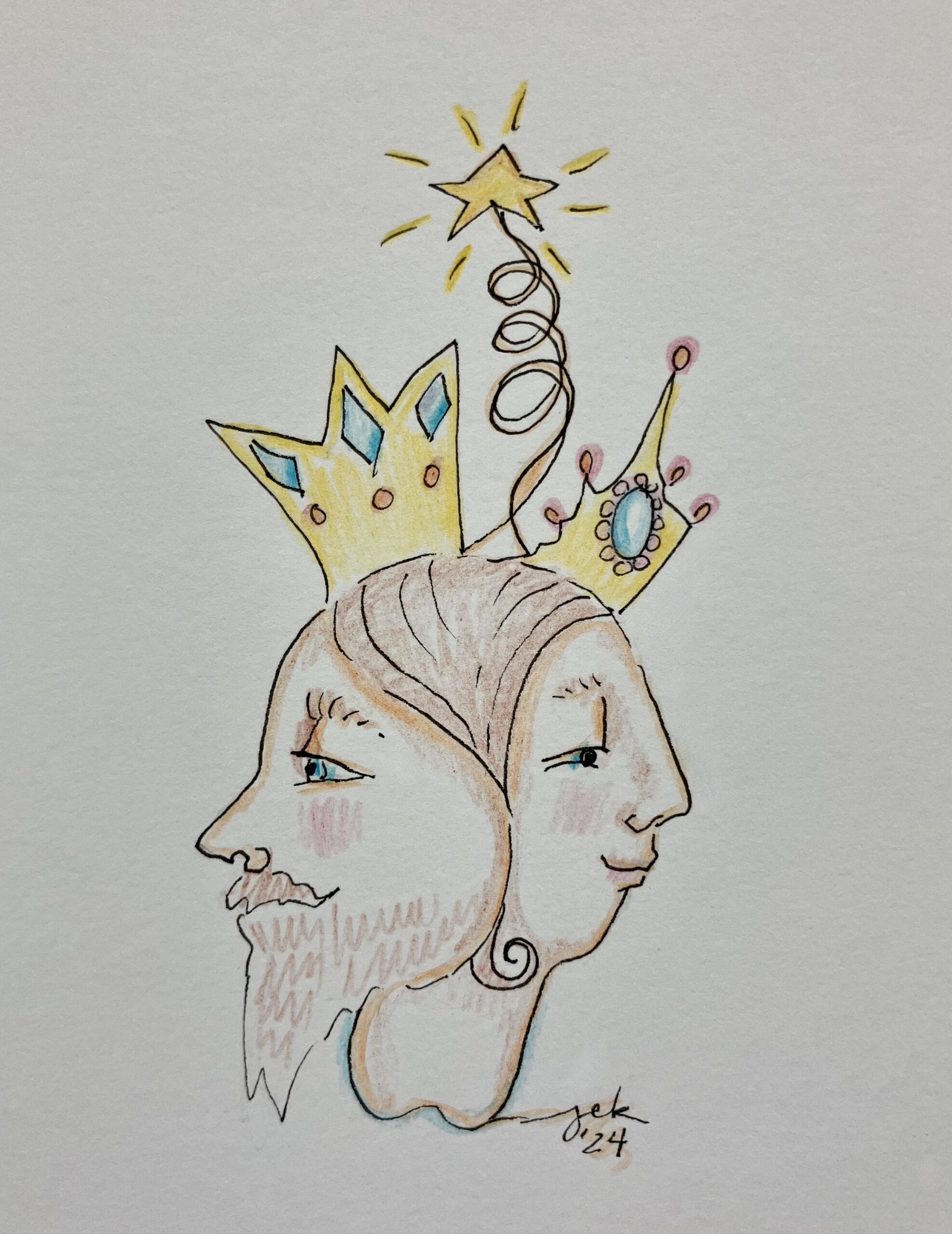
The Royal Couple…
-Artwork © 2024 Jan Ketchel

The mind is a subtle body that creates, runs, and maintains the physical body. A cord, similar to an umbilical cord, connects these two bodies while we are physically alive. When that cord eventually breaks, the physical body dies, while the mind, in its soul body, moves off to life in a  subtle dimension of reality.

The mind is a singular organ with two significant spheres, one conscious and the other subconscious. The conscious sphere is the King who chooses the blueprint for life in this world. The King is a ruling dominant of the mind, as reflected in the attitudes, beliefs, and thoughts one imbues one’s attention with and that determine the course of one’s life.

The subconscious sphere is the Queen, who creates life through her access to divine substance and intelligence, in accordance with the dictates of heredity and consciousness, which constantly provide her with guiding suggestions. The Queen is the ruling dominant of the mind that manifests new life.

The conscious sphere works with the subconscious sphere when it is awake. The subconscious never sleeps. When the conscious sphere  sleeps, the subconscious continues to monitor and address the needs of the physical body. These two spheres of the mind, though distinct, are deeply intertwined royal partners.

The physical brain, with its nervous system, provides the conscious sphere with the sensory data gathered through its five physical senses, allowing it  to choose behaviors that address its physical needs. Thus, if one senses cold through the sense of touch, they may decide to put on a sweater.

The subconscious sphere of mind also receives sensory data from the brain, which it automatically responds to via the association of sensory experience with reactive suggestions from innate instincts of survival and growth. Instincts are powerful programs of habitual response to address sensory activation and mental thought. If, for example, one hears a noise and imagines an intruder, a fear response and mobilization for physical action and survival will result.

The conscious sphere of mind constantly presents its own suggestions to the subconscious, who then manifests them through its total control of the physical body. Thus, if one tells the heart to reduce its rate of heartbeat, the subconscious slows it down.

Suggestions from both the conscious sphere of mind and the instincts, stored in the subconscious, influence the actions of the subconscious in accordance with the law of attraction. That law operates via like attracting like. The subconscious attracts divine substance to it as it fashions, in physical form, the energetic intent of consciousness.

The shamans of ancient Mexico called this divine substance and intelligence the energy of intent. This independent magical energy permeates the universe and is the energy behind all of creation. The subconscious mind has access to this divine energy of intent, which it calls upon to both run the body and manifest, in physical form, the suggestions it accepts.

The conscious mind has its own relationship with intent through its ability to intend its intentions to the subconscious mind via suggestion.  Like the subconscious mind, the energy of intent neither reasons nor moralizes, it creates what it intends to create.

The subconscious, with its access to the energy of intent, can thus create a reality that serves the whims of narcissism as equally as intentions presented for the greater good. A heartfelt conscious master of intent would thus choose to exercise their divine freedom of will for the intent of the greater good of self and other.

Consciousness also has the Knightly duty to protect its Queen, the subconscious sphere of the mind. Concretely, this can mean choosing to not expose itself to the content of the negativity influencers on social media, who seek to implant their suggestions into the subconscious minds of listeners and readers.

The subconscious does not rationally reflect upon the rightness of the suggestions presented to it, it is solely the irrational center of creation. The subconscious depends completely upon the conscious sphere to discern right action.

The conscious sphere of mind is also charged to face its own fears and negative beliefs which might be secretly undermining its own intentions for change in accordance with the greater good. For example, a hidden fear of scarcity might result in the subconscious being attracted to purchase less healthy but cheaper food to save money, whereby compromising its intent for perfect health.

Consciousness must monitor its use of words, as it is words that become the flesh. I’ll never be able to have that, is a powerful suggestion to the subconscious that will be manifested as scarcity and poverty. The antidote: immediately change all negatives into positives. In this instance, never have that becomes a definite, I have that!

The declarative, I have that, rests upon the conviction of the conscious sphere that it has successfully planted the seed of its intent into the fertile soil of subconscious substance. The law of growth insists that that seed will physically manifest through the energy of intent in the subconscious sphere of the mind. The conscious sphere waters its seed through its certainty that the full maturation of its seed of intent is a physical fact, in definite progress.

During the watering of the seed of intent, the affirmation, I have that, is repeated often in the conscious mind, together with a powerful exercise of the imagination that visualizes that in one’s possession, as one passionately feels one’s desire and joy at its realization. The conscious sphere must choose to engage in this practice frequently, to both impress the subconscious with its intent, as well as to become a habit of mind and, eventually, a new reality.

Consciousness, with its royal prerogative to choose, must also acquiesce to the divine prerogative of the subconscious to attract the necessary events to realize the given intent, in accordance with its own methods, and in its own time.

The mind is ultimately a royal partnership, of interdependence and deep love and respect, between the conscious and subconscious spheres of the mind. Without the conscious mind’s reasoning powers and discernment of right action, the subconscious mind is prey to create all manner of unsavory suggestions. Likewise, without a positive working relationship with the subconscious, the conscious sphere cannot realize the fulfillment of its true desires, and potential, while in physical form.

As with all intimate relationships, the relationship between the conscious and subconscious spheres of mind requires focused attention, appreciation, and mutual respect, to grow and become all that one unified mind can be while attached to life in physical form.

Mindfully,
Chuck

Chuck’s Place: The Subconscious Mind Is The Crown Of Creation

Divine crown of creation…
-Artwork © 2024 Jan Ketchel

Freud briefly used the term subconscious to denote activity of the mind that occurs outside the purview of consciousness. He quickly replaced this term with a vaster term, the unconscious mind. In everyday usage the subconscious is often used to designate the home of one’s nefarious shadow with its hidden impulses, passions and repressed memories.

Additionally, the subconscious is often associated with the part of the mind that stores longterm memory that has been emptied from the conscious mind to make room for new experiences, which is retained, briefly, as short term memory.  The subconscious is also designated as the part of the mind that stores habits, modes of behavior that automatically spring into action without conscious initiation.

The subconscious mind is most prominently at home in the field of hypnosis where it has been designated as the highly creative center of the mind, as well as the gateway to infinity. The subconscious is thus a functional entity that creates and has access to the deepest levels of the collective unconscious with its infinite riches and intelligence of mind.

The crown of creation has been associated with the mythical Eve of Genesis, who, in union with her consort, Adam, are the parent creators of humanity. The feminine and masculine principles reside in all of us, and interact on a daily basis. The subconscious is indeed the feminine principle in the human psyche that can create anything and make anything happen. The masculine principle is the conscious mind whose active suggestions stir the receptive crown of creation, the subconscious mind, to manifest its requests. For example, a creative idea is just a thought until it is acted upon; it is the act of creating it that brings it to life, such as a dance, a painting, a musical score.

The term, crown of creation, has been used to designate humanity as superior, formed in the image and likeness of God. God could be understood as humankind’s ever-changing outer projection of the all-powerful function of creativity. By withdrawing that outer projection and assuming positive inner control of the relationship between the conscious and subconscious minds, we might truly discover our access to divinity.

Ironically, we all exercise our divinity in everyday life, regardless of how mundane life is experienced. Thoughts and beliefs become suggestions to the subconscious mind that then materialize in moods and events that reflect our thoughts. For instance, if we tell ourselves that we are unworthy of the things we desire, we are delivered to a divine depression, as the subconscious mind pairs our beliefs with emotions that manifest that belief. In other words, our thoughts create our reality.

Although hypnotists can put the conscious mind of a client to sleep, thereby replacing its usual suggestive activity with the hypnotist’s directives, most hypnotists would agree that true empowerment rests in the client’s exercise of autosuggestion. With autosuggestion, we consciously and directly present our intentions to our subconscious crown of creation. Autosuggestion is the real jewel in the crown of creation, allowing for consistent redirection and manifestation.

The key is to wake up and take charge of the automatic activity of the divine couple within the psyche. As we notice the incessant dialogue of unworthiness in our thoughts, we can change the dialogue, quite passionately, to, “I am worthy.” Say it enough times and the crown of creation within will generate a mood of hope and optimism. The power of the subconscious mind is incredible; it truly can do anything.

The greatest challenge is to not attach to the outcome. Leave it up to the Universe. That means letting go to the subconscious mind’s deeply intelligent path to achieving the desired outcome. Be aware that infinite intelligence might first attract events into our lives that cause us to confront traumatic events stored in our shadow, which must be mastered to free up the ability to believe we are worthy.

Infinite intelligence might next attract people into our life that make us feel unworthy. The challenge here might be to recognize how our habitual negative beliefs attract people to reinforce that belief in social interactions. With this insight, we are freed to move away from these relationships, sending them off with compassion and gratitude for helping us grow.

The infinite intelligence of the subconscious mind might next generate themes that have plagued our ancestry with beliefs of unworthiness. Learning about these struggles and addressing them in the context of our current life might then free stuck energy at the collective unconscious level of the psyche, as the channel of creative energy is further cleared to manifest a deep sense of worthiness.

The journey to manifestation might take any of an infinite variety of paths, nuanced by infinite intelligence, to meet our specific requests. We must trust the crown of creation to guide us through the necessary steps of ultimate manifestation. Let go, and let the crown of creation do its job.

Sometimes the crown of creation presents guidance immediately. For instance, I took a break from writing this blog and went outside to cut up a fallen tree. As the chainsaw cut through a propped up horizontal log, I had a flash image of knowing that the cut log would fall on my foot. I didn’t respond to the guidance, and now wish that I had put on my steel toe boots! The infinite intelligence of the subconscious mind requires the participation of the conscious mind to meet its challenges and act upon its guidance.

Faith in the infinite intelligence of the subconscious mind, patience with its chosen path, and gratitude for its gifts will lead to the physical manifestation of our dreams.

May all your autosuggestions reflect the greater good of self, and all, as you connect with the crown of creation and fulfill your life.

You are the crown of creation,
Chuck

Chuck’s Place: It’s All In What You Emphasize

The nagual shaman, don Juan Matus, explained to his apprentice, Carlos Castaneda, that yes, the solid object reality we live in is indeed real, but, it is energy first. Our thoughts, which are interpretations of energy, manifest our physical reality.

What we manifest is real, but the broader truth is that all manifested realities are but an interpretation of infinite energy. Like the Hindu image of the cosmic ocean, the wave is but the manifested surface that appears, and then disappears, back into its underlying cosmic oneness.

From the Thoth Tarot deck of Aliester Crowley

Aleister Crowley, in discussing the Three of Swords, in his Thoth tarot deck, states that the extreme sorrow of this card can be likened to the Buddha’s initial stage of enlightenment when he encountered the pure potential of unmanifested reality: no forms, no reason.

Despite the bliss of this pure clarity, there is the necessary sorrow of releasing attachment to the familiar. Here, one is challenged to surrender to a  consciousness greater than one’s current manifestation.

It all begins in the mind. Outer reflects inner. It’s all in what one chooses to emphasize. Negative thought is certainly an option; it’s just as real an option as a positive thought—divinity includes everything.

Everything is possible, but the paradox is that to realize this truth we must be willing to let go of our cherished beliefs, which are fixations of energy that block the natural flow of energy needed to manifest desired change. The struggle is indeed one of submitting to enlightened sorrow, the necessary crossroad that accompanies moving beyond the familiar habitual self.

Take for instance a desired physical change in the body. One may state a healing intent of change but is constantly assaulted by the feedback of sensory evidence that contradicts one’s stated suggestion to their subconscious mind. This sensory feedback loop becomes its own internal dialogue that presents a more powerful counter-intention to the subconscious mind.

The technology of change, through the use of autosuggestion, insists that one emphasize repeatedly that their desired change is already accomplished. The seed has been planted in the divine substance of the subconscious mind and its full manifestation cannot be stopped, despite the presence of a solid sensory artifact, rooted in a prior interpretation of energy.

I suggest resting the body so that the subconscious mind, relieved of its physical oversight responsibilities, might clearly receive its new directive and move toward manifestation. With presence and passion, repeat the stated intention. Be bold, no hesitation, thy will is done.

At other times, be willing to suffer those moments of fear and sorrow when one glimpses the real possibility of letting go of the cherished limited self. Yes, you are chosen; you have chosen to emphasize the red pill: the life-changing, often painful truth beyond the current fixation of solid energy.

From the Thoth Tarot deck of Aliester Crowley

Of course, when the gig is up, the gig is up. In another card of Crowley’s Thoth tarot deck, the Three of Cups, we find the near perfect realization of the manifested intent of abundance. The presence of pomegranate seeds in the cups, though symbolic of abundance, also recall Persephone’s required stay in the underworld for six months of the year with her husband Pluto, god of the dead.

We cannot escape the expiration date located in the small print of every manifestation. Life insists upon growth, which always requires the letting go of the known.

This recalls the Buddha’s suggestion that life is suffering. Everything that we attach to ultimately limits our growth. But that sorrow can be sweet when we embrace love for all in this adventure of forever. One always has the choice to emphasize love and let it fully manifest.

With love,
Chuck