Tag Archives: recapitulation

Chuck’s Place: Human Complexity

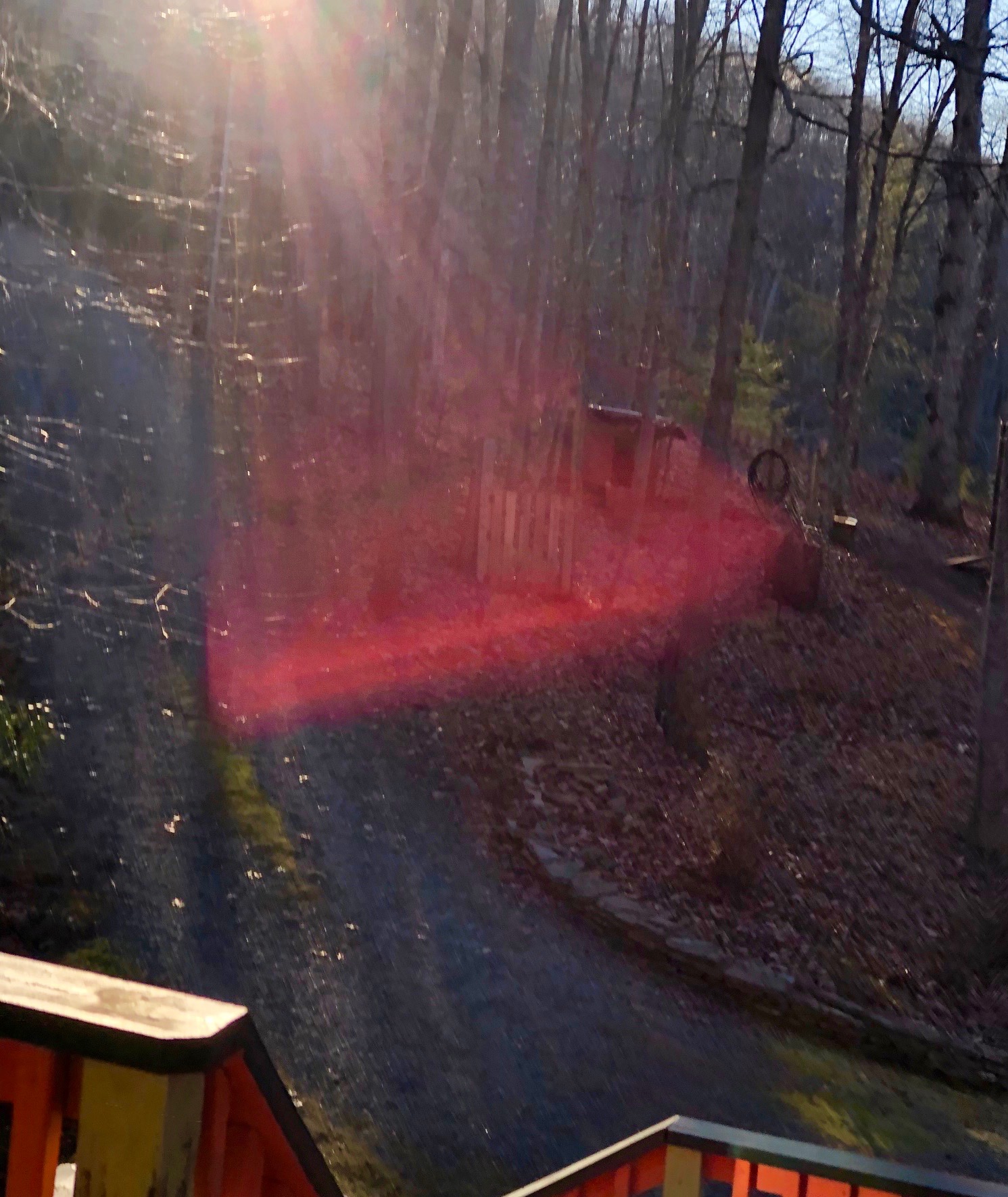
Working on unity…
– Photo by Jan Ketchel

Carl Jung defined a psychological complex as a ‘feeling toned idea’ that acts quite autonomously in the human psyche. When Jung was performing his word association tests he observed that certain words triggered delayed reaction times and emotional reactions in his experimental subjects. Something ‘else’ was interfering.

This led to his discovery that there are autonomously functioning parts of the psyche acting outside of consciousness. Jung called these influences ‘complexes’. Freud spent his entire career highlighting the Oedipal complex, which he considered the greatest unconscious influence upon the human psyche.

Today we have terms like alters, ego states, fragmented parts or archetypes to depict these autonomous influences upon consciousness. Robert Monroe took Western psychology a step further with his research into out-of-body (OBE) states, where consciousness discovers non-material parts of the self that regularly influence consciousness from subtler planes of existence.

Monroe’s discoveries concur with Hindu science with respect to the emotional/desire body as the first to be encountered in an OBE state. Many OBE explorers report an encounter with excess sexual desire in their early explorations. Monroe also discovered a preponderance of sexual preoccupation by many travelers who had left human form through physical death, as they remained fixated on sexual activity, though lacking a physical body.

Monroe’s discovery certainly lays credence to Freud’s emphasis upon the overarching significance of sexuality for human beings. Sex may be the major karmic issue that sends disembodied spirits back into human life. Monroe also reported encounters on the astral plane with the energy body of sleeping human beings, equally preoccupied with sex in their dream states.

Beyond sex are the many emotional attachments that humans, in their energy body OBE states, are found to be preoccupied with. Civilization, with its emphasis upon reason, uniformity and conformity, has suppressed and repressed the spontaneous living of impulse. What we previously considered as repressed and contained within the psyche in the physical body may be very actively living on the astral plane outside of human consciousness.

The current polarized attitudinal split in the human race might actually reflect this polarized split within the human psyche, manifesting as an outer collective opposition. If we distill this opposition, it could be reduced to, simply, reason vs impulse. Resolution of this opposition is fundamental to unified progress.

Shamans introduced the practice of recapitulation as one’s individual soul retrieval journey. If one can bring consciousness and reconciliation to all of one’s parts, one can achieve wholeness while in human form. To the extent that this remains incomplete will determine one’s karma. After all, how can one go forward as a fragmented soul. One must first discover and gather together all of one’s parts.

Elmer Green served as his wife Alyce’s shamanic guide in her journey through Alzheimer’s disease. Alyce had spent her entire adult life immersed in the highest of spiritual principles. As her energy body journeyed into the astral plane, as she went the course of Alzheimer’s, she encountered her shadow self, the repressed and unloved side of herself, for the first time.

Besides her memory loss, she became paranoid and rageful much of  the time. These experiences were largely driven by her encounters with her unknown self. With extreme patience, Elmer helped her to get grounded and reconcile with her fuller self. This enabled her to enter infinity at an advanced level, well beyond the shadow bardos, when she physically died in this world.

Jung’s choice of the word complex to denote autonomous parts of the psyche truly holds up. Humans are complex beings! The key challenge in human form is to resolve all of one’s complexes and become one’s true wholeness. With wholeness one’s energy is fully united, as everything becomes possible.

From complex to unity,

Chuck

An Excerpt From “Dreaming All The Time”

Here is an excerpt from the next book in The Recapitulation Diaries. I am a few months away from finishing the recapitulation. If you’ve been following my experiences and reading my books you might remember it was a three-year-long journey of intense inner work. As the third year was nearing its end, the recapitulation intensified, my old self and my old world attachments not willing to give up so easily. As they say, it’s always darkest before dawn. Here is the excerpt:

February 4, 2004

I wake in a panic at six a.m., mind and body vibrating so hard I fear that I’m shattering, breaking apart into a million tiny pieces, turning to dust between the covers of my bed. Why now, when I’ve worked so hard to bring myself together? I breathe and breathe and breathe, willing myself back together with every breath I take. Pushing the panic away, I remind myself of why I’m doing this recapitulation: for life, for wholeness, for oneness, for the joining of my two souls. And then I remember that I woke in the night in fiery pain! I cried, calling out, “Sorry, sorry, sorry,” whimpering as the pain tore through me. Gradually the pain stopped and I fell back to sleep. It was like a bad dream, but it was no dream at all; it was an old memory searing through me.

Why am I still suffering such pain? What is the point of it? And why did I feel I had to apologize? I was the one in pain and yet I felt I had to apologize, and for some crazy reason it worked, it made the pain go away. Now I lie still, just breathing, turning myself over to the safe hands of my guides, knowing that they won’t let me die. It’s not my time. It’s time now to finish this healing journey.

Eventually, I’m able to move my body and get out of bed. If I can just get through the next few days and months, I’ll be fine, I tell myself. I make coffee and set my sights on the day ahead. I have a meeting with an outdoor art committee, an article to write, an illustration to do, and a decorative painting job to start, so all of that will keep me busy. The key is to remain busy.

To whom was I apologizing last night? To the abuser? It felt as if I were apologizing to him for killing him off, for having to commit this act of war against him, for we are at war as I seek to take back my energy. Or perhaps I was apologizing to my inner girls because we are leaving those old familiar places of pain and comfort, of fear and depression, where everything is so known and predictable, and so strangely safe. It’s striking how pain and comfort are so terribly linked. But the apology worked, the pain eased, and I fell easily back to sleep.

“Something wants you to go back,” Chuck said to me yesterday. “Do the movements [Magical Passes] to counter it. Every time you go through a major shift something wants to pull you back. Fight it.”

Everything is shifting and changing now and I’m feeling the full brunt of it, a head-on collision of the old and the new.

© 2020 J. E. Ketchel, Dreaming All The Time, Volume 5 of The Recapitulation Diaries

Chuck’s Place: Unbending Detachment

Look to the skies for guidance on how to remain detached and yet fully energetically connected!
– Photo by Jan Ketchel

The key to actualizing our human potential is energy. If you have enough energy you can do just about anything. Recognizing the value of conserving and retrieving energy, shamans discovered that the human being’s most lethal energy drain is offense.  Being offended, by anything and everything, costs humans the lion’s share of their vital energy.

When we feel offended by the words and deeds of others we have emotional reactions, like anger, fear, and resentment that tax the central nervous system. We lose our balance, as we become emotionally charged, seeking relief in some kind of action. Often, obsessive thinking continues to replay the offense, which sustains and feeds this state of emotional tension.

Is it possible to have an objective reaction to another’s offensive behavior without being personally offended? Yes, through gaining conscious control of our instinctive emotional reactions and deciding, on the mental plane, to not be offended by the behavior of others, regardless of how ruthless it might be.

Who could forget Robert De Niro’s “Are you talking to me?” in the movie Taxi Driver? Instinctively, we feel the growing tension of his mounting anger, as he incessantly repeats this famous line. Truthfully, many are drawn to such unabashed expressions of rage and contempt, which vicariously satisfies our own unexpressed rage and resentment.

Now, if Robert De Niro had simply walked away, the movie would have flopped. On the other hand, if we want to start saving our vital energy, we must be willing to let go of the many dramas our internal dialogue ignites through its constant interpretation of offense, throughout our everyday lives.

This is not to say that there is not significant horrific behavior that must be addressed. At issue is the subjective state of offense that accompanies one’s reactions to those behaviors. One can assess a situation and decide upon a course of action, unencumbered by emotional reaction. In fact, this is a core teaching of all martial arts.

When one becomes emotionally offended by an opponent’s move, one loses one’s edge, fights poorly, and generally loses. As in shamanism, in the martial arts the key to success is to not become attached —offended— by one’s opponent’s behavior. The objective is to stay present to what is and completely conserve one’s energy in order to be fully engaged in one’s most efficient counter response.

In fact, when one becomes offended one actually gifts the opponent one’s own energy. Offense can lead to hopelessness, powerlessness, and surrender, as one’s vital energy reserves become depleted. Bullying behavior is actually a strategy to catch one’s opponent in the net of offense, weakening their game. Muhammed Ali was a striking example of such tactical behavior leading up to a fight, as he would mercilessly insult and demean his opponents.

Instinctive reactions can be, and often are, life saving. What we take as an instinctive reaction, however, is very frequently the ego’s decision to be offended, whereby calling forth the troops of passionate reactions to exact retribution, in some form. This is a hybrid, instinctive reaction that serves only the ego, not the true needs of the self.

Ego must learn to be a servant to the true needs of the whole self, rather than just its own self-aggrandizement. Even if the ego has been directly insulted, the ego must consider the energetic impact on its central nervous system, and its energy reserves, before determining its course of action.

If the ego faces the fact that we live in a world where life feeds upon life, it can come around to the fact that we live in a predatory universe and not get offended by it. Of course, this does not stop our need to defend ourselves, but how much stronger and more clearheaded we would be if we didn’t burden ourselves with being offended.

When the shamans speak of detachment, they are targeting what we typically judge to be offensive behavior. They promote inner silence to avoid offensive dramas when navigating oncoming time, to best be prepared to respond appropriately, with the least taxing of our energetic reserves. Inner silence entails quieting the mind, pulling into the heart center, and waiting patiently for the guidance that shows us how to act in a way that is truly right.

In addition, they recommend a thorough recapitulation of one’s relationships in life, particularly circumstances that left one feeling offended. Recapitulation frees one’s energy stored away in offense, but also frees one from being triggered by current circumstances that reflect one’s unresolved past.

The truth is that there are highly sadistic, abusive people who commit horrific acts. Recapitulation does not change this fact, but it does free one from draining one’s vital energy by being eternally offended by them. Detachment means accepting the truth of what was, and fully harnessing one’s freed energy to be redeployed in new life.

I send out the intent for unbending detachment, as we collectively advance our world into new life, beyond offense.

With Unbending Detachment,

Chuck

Chuck’s Place: How A Change Might Happen

Change is happening all around…
– Photo by Jan Ketchel

Our bodies are governed by deeply embedded evolutionary programs, the stuff of DNA and archetypes. These programs are housed in the operations of the subconscious mind and operate quite unconsciously through the autonomic nervous system. Thus, the heart beats at a rate governed by its inherent instructions, not by conscious intent.

However, as has been definitively proven by advanced Yogis, consciousness can assume control even over the heart rate. In fact, Yogis have been able, under laboratory conditions, to stop the heart for several minutes, and then resume normal beating.

The operative principle here is the shaman’s credo: suspend judgment and see what happens. If we dismiss attempting to do something because we don’t believe it is possible, then we stay aligned with this now blocking-belief, based on principle.

In addition to these inherited programs are the socialized messages we have internalized as beliefs, which also take up residence in the subconscious mind and automatically influence our body, mind, and emotional states. Thus, being told, for instance, that we have an incurable disease might result in a subconscious acquiescence to such a prediction.

In this case, we are faced with two powerful influences upon the subconscious: inherent and socialized.

The inherent influence might be a genetic predisposition to a disease. The influence of this genetic coding might indeed challenge the body in a predictable way. This is real.

However, as successful placebo interventions demonstrate, the power of suggestion can have an impact on the course and even elimination of a disease. If one is able to suspend the judgment that upholds a blocking belief and engage the power of intent, anything could happen.

The socialized dimension upon the subconscious might be triggered by the power attributed to an authority figure. A doctor is a person of high authority that easily triggers the commandment to honor one’s parents, holders of omnipotent power in our very impressionable childhood years.

Honoring the parents may have generalized to all subsequent authority figures in life. Thus, one may feel too inadequate to question the pronouncement of such an authority figure. Hence, engaging the possibility that one can influence the course of one’s encounter with disease might never be allowed, due to the influence of subconscious beliefs.

It is extremely difficult to talk oneself out of a belief. Once installed in the subconscious, beliefs act autonomously and with a great deal of power, as is easily seen in the intensity of emotions that are aroused when a belief is challenged. Just try having a rational discussion with anybody about their current political beliefs—I guarantee you’ll see a display of emotion!

The best approach to working with a limiting belief is to acknowledge it but not stay under its domination. So, for instance, if I am told I’m dealing with a disease, I will acknowledge that fact, that my symptoms fit a diagnostic category.

Next, I quite definitely would state my intent: “I intend to heal!” Here I am speaking to Intent itself, a power in the universe that I seek to engage in my healing process. If one has no belief in such a higher, independent power I would suggest stating the intent anyway, regardless of doubt.

Intent may be the language that activates one’s link to what physicist David Bohm termed the Implicate Order, the deeper interconnected oneness that underlies our surface experience of separateness in reality. Communication from this dimension utilizes synchronicity to guide consciousness on its journey of change.

The intent to influence the subconscious is critical, as the subconscious is the warehouse of our belief system, as well as the executor of most bodily activity. Taking conscious leadership of the directives we want our body to follow is directly linked to the suggestions we give the subconscious. Never assume a subconscious program can’t be overridden by conscious intent.

Next it is critical to be very patient. Subconscious programs are shrouded in powerful defenses to protect the sanctity of these default positions. We must calmly but incessantly repeat our intentions to the subconscious. If we are impatient we will easily be defeated in our intent.

Furthermore, the course the greater Intent might take us in might be quite counterintuitive. We may need to suffer many surprises that actually might be a course of recapitulation, necessary to journey through to free our energy from the roots of a disease. Perhaps an ancestral problem embedded in a disease may need to be experienced and solved before it can be released.

Finally, and most challenging, we must suspend attachment to the outcome of our efforts. The goal is to be impeccable in stating our intent and meeting the challenges that unfold. Attachment to outcome taxes our energy in wish-fulfillment and depression when things don’t unfold as we expect them to.

Be definite in intent, be patient, and take the journey that is presented, the journey of a lifetime. See what happens!

INTENT!

Chuck

Soulbyte for Monday August 24, 2020

Let bygones be bygones. Stay connected to what is now current, to what is now important, to what is now of utmost concern, for to stay caught in the past serves only the past and the energies that reside there and keep you stuck in old habits and old ideas of the self. Turn in a new direction now with the intent of your strong heart, the discipline of your determined spirit, and the positive outlook of your future self. Change is imminent. Why not come along?

Sending you love,

The Soul Sisters, Jan & Jeanne