Time alone in a quiet place… – Photo of Chuck sitting quietly in the shaman’s cave by Jan Ketchel
Take some quiet time to listen to today’s channeled message, offering calming insight into your deeper, calmer, loving self. It’s important in these times of outer turmoil and chaos that we all retreat at times, otherwise we end up depleted, angry, confused and ungrounded. Take time for some sound and calming reminders of who you really are. Take some alone time.
When times get tough remind yourself often that you are energy, that everything is energy in constant motion, that all things change and change they will. You cannot stop change or hinder what will be, but you can choose how and if you attach, react, or get infected by it. As an energy being you are flexible. You can turn down your own energy, clear it, let other energy go through you without being infected or effected by it. You are in control of your own energy. And remember, what is outside of you is only energy too after all! Keep your own energy centered on your calm heart and all will be well, within and without!
Is it time to let the universe be part of your life? – Art by Jan Ketchel
Here is our audio channeling for this week. May it guide and help you, especially as we all seek to learn what it means to be lovingly detached, wanting and eager for life and yet having to wait for what we think we need so badly. Today’s message offers some tips on how to manage all of that! Have a great week!
The highest form of love is love without condition, the total embracing acceptance of all that we are.
This is the welcome that we all seek as our birthright into life in this world, loving acceptance of all that we are, simply because we are. This is the love the child longs to see mirrored in its parent’s eyes to help fortify a deep sense of worthiness, confidence, and lovability that encourages the journey to individuation, to becoming all that we truly are in this life. This is the love we seek in partnership, a loving embrace of all of our body self, all of our virtues as well as all of our sins.
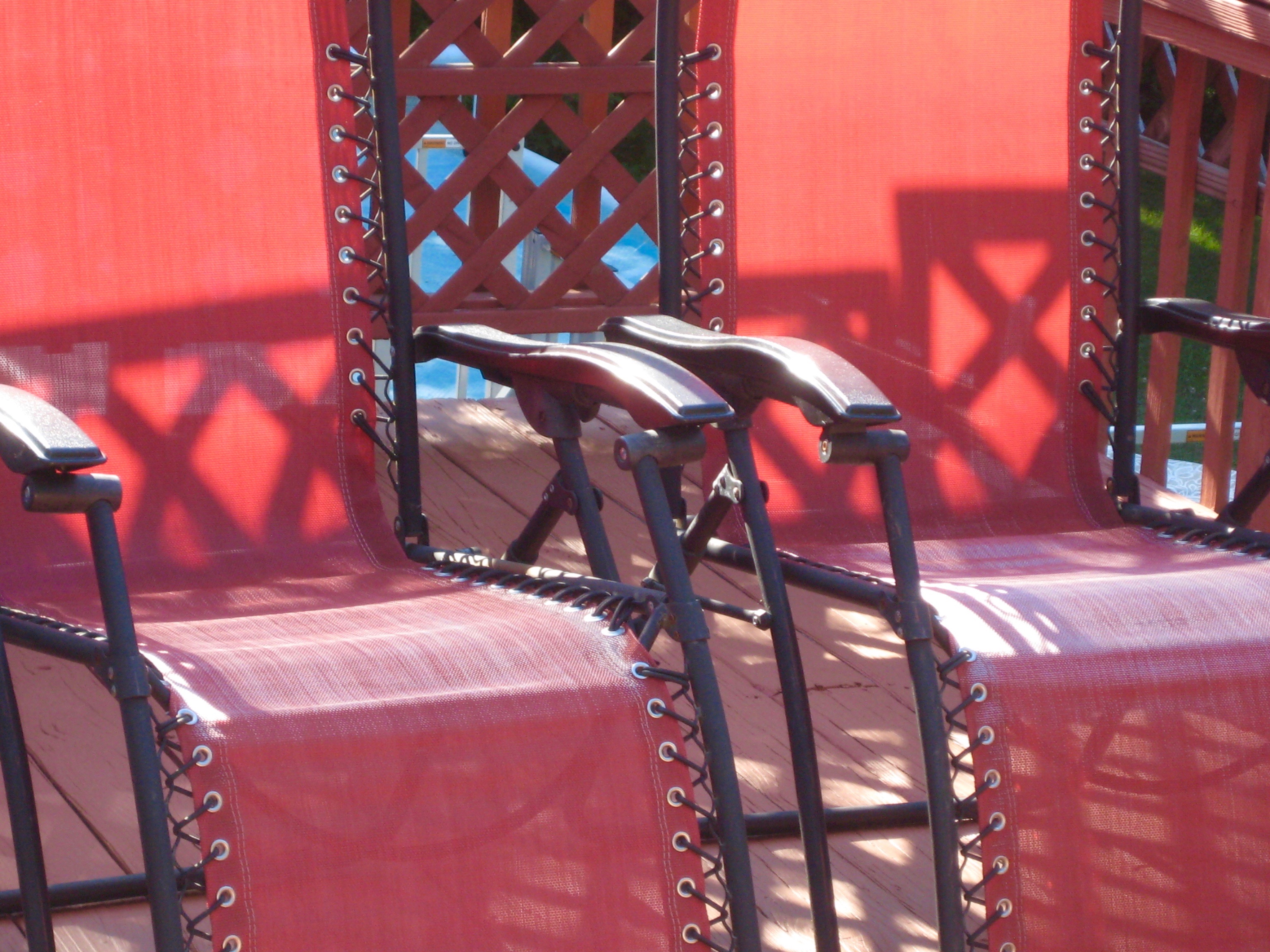
Shadow partners… – Photo by Chuck Ketchel
In our time, the longing for unconditional love has come to be felt as an inalienable right, an entitlement. If one does not experience unconditional love immediately one feels empowered and righteous to end a relationship or marriage rather quickly. However, relationships are cauldrons where confronting the unacceptable, in both self and other, is part of the process of growing. If one exits a relationship due to unmet acceptance too prematurely the opportunity to experience the coveted “unconditional love” may be missed.
The first challenge in achieving unconditional love is to unconditionally love the self. The process of socialization we all encounter growing up leaves us with a huge shadow self, a rejected part of the self that we are taught must be forsaken due to its unacceptability.
Do we know that shadow self? Do we hate it as it has been hated? Do we expect a partner to remedy our disdain for a part of ourselves that even we do not love, expecting another to lovingly accept all of us?
Can we actually turn over that unwanted shadow self to another to make it wanted? We can try, but we’ll never fully believe the outcome. Even if a partner claims love for that which we hate in ourselves, it will not be redeemed. We will either need constant reassurance to silence our inner doubt or we simply won’t believe our “naive” partner. We will retain the “true knowledge” of our unacceptability.
In other ways, it might just be that parts of ourselves deemed unlovable might indeed be immature, with a limited capacity for relationship. Young children are far more concerned with themselves—primary narcissism, it’s called—than the needs of others. This may be quite appropriate at an infantile stage of development, but it is hardly adaptive to adult relatedness, which requires a fuller knowing and appreciation of another, as well as of self.
Our challenge might be to love that very infantile part of ourselves but realize that it is also anachronistic, non-adaptive to adult life, and unacceptable when acted out in adult relationship. This may be a case where we need to access the loving but firm adult/parent within ourselves that sets boundaries upon the demands of an infantile part of ourselves. This may allow for adult connection with another where we can share the fullness of ourselves but don’t burden the relationship with expectations that need to be grappled with within the self.
When Buddha speaks of loving compassion he speaks equally of detachment. Unconditional love—acceptance of all—does not mean attachment to all. (Attachment in this sense meaning having to engage in the acted-out entitlements of another.) In detachment, we can fully love and accept another yet insist that they manage their own infantilism.
Unconditional love is not unconditional license. Unconditional love is full acceptance of what is, while assuming full responsibility for integrating it into the self and into life at a level where life can receive it and help it to grow. Ironically, the key to unconditional love is complete loving acceptance of self while facing the conditional reality that we must grow up!
If we have been failed by those entrusted to connect us with unconditional love we must pick up the mantle of finding our way there on our own, beyond blame and bitterness. Our truest parent, Mother Earth, entrusts us with this journey as she evokes a healing process that requires deeper connectedness and love for that which has been rejected. If we are here we have been invited to partake in this great healing crisis, our own and that of the world now. It all begins with the journey of unconditional acceptance of the self.
Facing the truth of the path that lies before us… – Photo by Jan Ketchel
We are all, at some time in our lives, faced with having to admit that something just isn’t working for us anymore. At such times we might get angry. We might become sad. We might become defiant, or we might simply give up. But the truth is that when something is not working for us anymore we are being asked to face a truth about ourselves, about our life, and about our future. We are being asked to change something and the decision we make is crucial to what comes next.
Sometimes we might have to act on the behalf of another person, and this too puts us in a unique position. Robert Monroe—documented out-of-body traveler, founder of the Monroe Institute and the developer of Hemi-Sync audio technique—described, during an out-of-body experience, being in a position to have to make a decision on behalf of another living creature, in this case, a dog.
Here is the story: He and the dog are the best of companions. They are taking a walk when the dog, running after a rabbit, is struck by a truck. Monroe assesses the situation. The dog is obviously beyond recovery. In order to alleviate his suffering, Monroe takes responsibility and acts quickly. Soaking his shirt in gasoline from the gas tank of the truck that struck the dog, Monroe places the gasoline soaked shirt over the dog’s mouth and with the most tender and caring embrace helps his dear dog go.
Coming out of the OBE, Monroe learns from his teachers that at another time in his life he would have been swept up in such emotional turmoil that he would not have been able to act as quickly and wisely toward his dying dog. He would have clung to him, but it would have been to the detriment of the dog’s spirit, for the truth was that the dog was dying and overpowering emotional attachment would have offered nothing of substance to the situation. At the time of this OBE, however, Monroe had advanced to a place of utter detachment. He had control over his emotions and could focus his energy where it needed to go. Without pity, but only filled with love, he could do what his doggy friend needed him to do.
Sometimes it’s time to let people, pets, things, behaviors and habits go, as succinctly and with as much love and kindness as Monroe administered to his dying dog. They’d had a good life together, but without regret, and without blaming the truck driver for striking the dog—for he knew there was no cause to fault him—Monroe acted in alignment with the truth of what had occurred. He was so emotionally detached that within seconds was able to read the entire scene. His role was clear. He was there to administer impersonal loving kindness and compassion; a karmic duty was performed.
Our own evolutionary process prepares us, through each lifetime, as we train ourselves to take responsibility, gain control over our emotions, and focus our energy, just as Monroe did, to get to the point where we are able to face the truths of a certain situation without attachment or blame.
Wise knowing comes when we are ready to act upon it… – Photo by Jan Ketchel
Sometimes we are called to action unwillingly; we don’t really want to, but we feel obligated. Sometimes we are ready to jump in when asked. Sometimes things are thrust upon us suddenly, as in Monroe’s case. On the day he took his dog for a walk he had no idea he would be called upon to do what he did. Such are the moments when we realize our true spiritual state, when our evolutionary progress is made clear.
The question is: Will we be ready, when called upon, to do the thing that is right for all involved, with only goodness in our heart, without attachment, need, dependency, but simply because it is the right thing? Will we be able to transcend the personal and let go?
“Letting go” can take many forms, depending on our lives, how we’ve created them, and how ready we are to change and allow for new life, whether a new phase of life on earth, or acquiescence to the death of the physical body. Letting go is allowing for change that is right to actually take place, changing us in the process.
In the end, we must all take responsibility for ourselves, for our decisions and our actions; if we don’t or can’t then things will be imposed on us. And so it is imperative that we practice taking control of our own letting go now, in full consciousness, not letting even the letting go overpower us, but riding through it with as much grace and love as Monroe did when he realized it was time to let his dog go.
Part of our karmic process now involves letting go of that which no longer serves us, be it old habits or behaviors, attachments, loves, fears, dislikes, resentments; even our physical prowess must go at some point. The list goes on. We all have something to let go of, as we are all challenged to free ourselves to move on into greater life every day. Can we take full responsibility for every aspect of our lives and move on without burdening, blaming or becoming a victim?
The difficulties we face when we are involved in the lives of other adult beings is that we cannot control or really ask anything of them. Ultimately, every decision, choice and action is up to them. We might see very clearly that they are in a critical situation, being foolhardy, putting their lives at risk or burdening others with their behaviors, and although we might see that there is no time like the present to give advice, the truth is that we really do have to let our own expectations go and allow others to take their own journeys, keeping in mind the lesson that Monroe learned from his teachers, that during another lifetime he had not been so advanced. We are all living the life we are living in order to learn a crucial karmic lesson, even those who frustrate us the most!
What tomorrow may bring we don’t really know, but we can prepare now… – Photo by Jan Ketchel
People will do what people will do, but at the same time if we are called upon to assist we must state the truths as we see them and ask the other being to take full responsibility for decisions made.
We can offer help and guidance, but ultimately we have to step back and let nature take its course, including the nature inside another being. That kind of letting go is as poignant and caring as Monroe’s action on behalf of his dying dog, and learning to let go in such a manner is a sign of true compassion.
Who are we to know the truth behind someone else’s karma? We can only guess. Unless it is our own karmic journey, we only have the outer truth available to us, and that may be very clear to us, though not at all to the other being. At such times, our only recourse may be to administer love, kindness, and compassion, and without attachment send that other being on their journey, into new life in whatever form that will take.
Sometimes love is enough, Jan
The episode with the dog is described in Robert Monroe’s book, Far Journeys.