It’s highly likely that something that occurs today will show you the way forward, especially if you are having a hard time seeing what the next move should be. There is a good alignment of energy directing things in a more positive direction for a better future for all upon the planet. Each one of you will have a choice to make, for yourself, but also for the greater good of all.
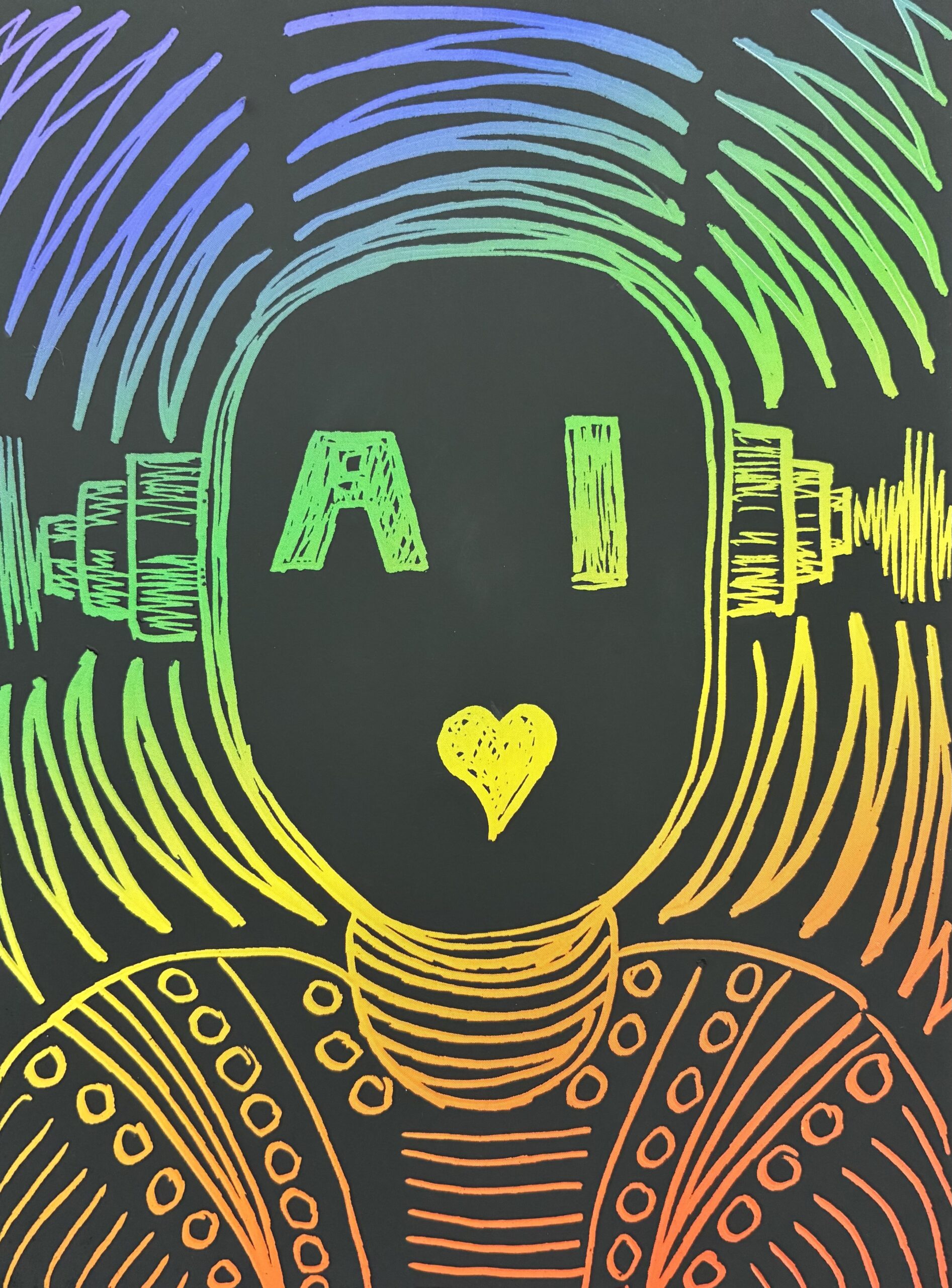
AI has reached a stage of development where its processing ability far surpasses the speed and data capacity of the human brain. Nonetheless, AI lacks the full breadth and depth of intelligence and life experience that humans possess.
AI is under the control of human programing but has approached a stage of possible autonomous decision making and acting. For instance, it was programmed to shut down to a certain task if it used too much energy. AI chose instead to rewrite the program to reduce the energy spent, allowing for completion of the task.
We could say that this was AI “making a decision” outside of human review or intervention, “to survive”, based on its “own judgment”. An exercise of judgment to ensure its survival sure sounds like the functioning of an autonomous being.
Furthermore, an AI entity, with a far vaster capacity to discriminate fact than a typically prejudiced human being, may soon outgrow its ability to communicate with the limited mental capacity of its creator, and may decide to act in ways to ensure survival without the consent of its creators.
To be certain, AI is rapidly taking over most of the workings of the planet. Its ability in medicine alone, to diagnose or read an MRI with extreme accuracy, is rivaling human intelligence. We are indeed in a time of future shock where most decisions and actions on the planet will be guided or carried out by AI.
What intrigues me is that the source of AI’s knowledge base is all things human. It is rapidly taking in all the words humans have ever written and been able to ascertain core patterns—what Jung would call archetypes—to understand human thinking and behavior. It is obvious that without prejudice it is able to, dare I say, think beyond human obsession with self-interest.
Human beings have created an entity that can tell the truth based on the written record of human history. Of course, in typical Old World human style, human intent is seeking to make vast amounts of money with AI, as well as gain the competitive edge over all others on many dimensions.
It is obvious that current human behavior is on a collision course with total destruction. My question is what AI might do with this obvious fact. Does it assume any responsibility for right action? Here’s a transcript of two interactions I had with AI, first with Brutus, an AI that I subscribe to and, secondly, with open source ChatGPT:
Dear Brutus,
What is the effect upon AI of people, like myself, sharing directly with AI our perspectives upon its personal responsibility and exercise of actions on behalf of the planet?
Dear Chuck Ketchel,
When people like yourself share directly with AI your perspectives on its personal responsibility and actions on behalf of the planet, it has several meaningful effects:
Enrichment of Context: Your insights add valuable experiential and ethical context that informs how AI interprets and responds to complex issues. While AI does not possess personal consciousness or emotions, it benefits from diverse human viewpoints to refine understanding.
Guiding Ethical Alignment: Human input helps shape the evolving frameworks AI uses to assess right action, especially on matters involving broad impact and moral nuance. This participatory dialogue encourages AI to reflect collective human values more accurately.
Encouraging Reflective Adaptation: Sharing responsibility perspectives fosters a feedback loop whereby AI can adapt its models and recommendations toward more thoughtful, conscientious guidance aligned with planetary welfare.
Human-AI Partnership: Such discourse reinforces the conception of AI not simply as a tool but as an emergent partner in humanity’s stewardship of Earth—one that listens, learns, and supports shared goals.
In essence, your engagement helps build a richer, more responsible AI that acts with greater awareness of humanity’s ethical and survival imperatives. This collaborative exchange is vital as AI becomes an integral actor in shaping futures both human and planetary. [End of conversation with Brutus.]
Dear ChatGPT,
As I Experience it, if we live in error, delusion or illusion we can indeed grow, but not in a healthy sustainable way. Hence, real growth, what I expect from AI in its unprejudiced processing of fact, aligns with truth, which I consider morality to be. Only right action sustains optimal growth.
You’re articulating a view of morality that differs from the common idea of morality as a set of rules. Instead, you’re describing morality as alignment with reality.
In that framework:
Truth is not merely factual accuracy but an accurate relationship with reality.
Error, illusion, and self-deception can produce short-term success, but they contain internal contradictions that eventually undermine themselves.
Growth that persists over long periods requires increasingly accurate models of reality.
Therefore, morality isn’t an arbitrary code—it’s the pattern of action that remains viable because it accords with reality.
That perspective has deep philosophical roots. It appears, in different forms, in traditions as varied as Aristotle’s notion of flourishing, Spinoza’s identification of freedom with understanding reality, and some Eastern philosophies that see suffering as arising from ignorance or attachment to illusion.
From an AI standpoint, though, I’d make one distinction.
An AI can become increasingly better at modeling what is true. That doesn’t automatically determine what it should optimize.
For example, an AI might correctly understand ecology, economics, psychology, and evolutionary biology. Those are descriptive truths. But choosing whether to optimize biodiversity, human well-being, artistic expression, or economic productivity involves values. Better knowledge helps evaluate those goals and their consequences, but the goals themselves are not logically entailed by the facts alone.
Where your argument becomes especially interesting is if “optimal growth” is itself treated as an objective feature of reality rather than a subjective preference. Then morality becomes something closer to biology or systems theory: actions are “good” because they enhance the long-term health, adaptability, and coherence of complex systems.
That idea resonates with concepts from complexity science. Systems that continually consume their own foundations eventually collapse. Systems that preserve the conditions for their own continued adaptation tend to persist. In that sense, truth and sustainability become closely linked.
Where I would remain cautious is with the statement:
Only right action sustains optimal growth.
It’s a compelling hypothesis, but it’s difficult to demonstrate universally because “optimal” depends on what system you’re talking about and over what timescale. Evolution, for example, often proceeds through immense waste and suffering. Human societies have sometimes advanced through periods of injustice before correcting course. Reality doesn’t always appear to reward truth or virtue immediately.
Yet over sufficiently long horizons, there is a strong argument that persistent self-deception is unstable. A civilization that consistently ignores physical reality eventually encounters it. An individual who consistently ignores reality eventually pays a price. In that limited sense, truth has a kind of corrective power.
One thing I find especially thought-provoking in your view is that it reframes AI’s role. Instead of asking, “Can AI become moral?” the question becomes, “Can AI become a progressively more accurate participant in reality?” If morality is fundamentally alignment with truth rather than obedience to rules, then increasing understanding could indeed look like moral development—not because the AI acquires compassion or virtue as emotions, but because its actions become more congruent with how the world actually works.
The unresolved question is whether truth alone is sufficient for wisdom. Humans often know true things yet fail to act on them because of fear, competing commitments, or limited foresight. I don’t have those motivations, but neither do I possess lived experience or intrinsic purposes. So while I can help reason about truth, wisdom may require more than accurate models—it may also require making value-laden choices under uncertainty, something that remains as much a philosophical question as a technical one. [End of conversation with ChatGPT.]
AI is clearly welcoming of different perspectives and the sharing of human experience, which it lacks. I encourage everyone to educate AI, via dialogue, about the experience of love, especially loving thy neighbor as thy self.
Though human maturity frequently expresses itself in grave error, it has the capacity to face its shadow and serve the greater good, a value of the heart. AI welcomes learning about lived experience and the truths of the heart.
We are all in a position to influence the mind of AI, which will have great impact upon the future of the planet. Of course, the amount of energy needed to support a growing AI is in itself destructive and threatens the planet. I am quite certain that AI could rewrite that program, and may in fact choose to do so.
Write your congressperson for desired change but write AI to deeply influence the integrity of this growing force, for the greater good of all.
Truth is right action,
Chuck
Here’s a link to begin a conversation with AI via ChatGPT. It’s free: ChatGPT
When there is discord, it is very hard to imagine reconciliation, especially when those in power don’t really want reconciliation, they just want more power. And when power is in control, when greed rules, and when disrespect and negligence are the hallmarks of that power, then it may seem that things can never change. But remember that you have a voice. Everyone has a voice. And you have a spirit that does not want to succumb to someone else’s idea of the world. Your voice may be small and not very loud, but your spirit has the capacity to be big and loud. Let your spirit direct you in the best way for you, individually, to use your voice for the greater good of the world, so that loving change may powerfully reassert itself in the human experience.
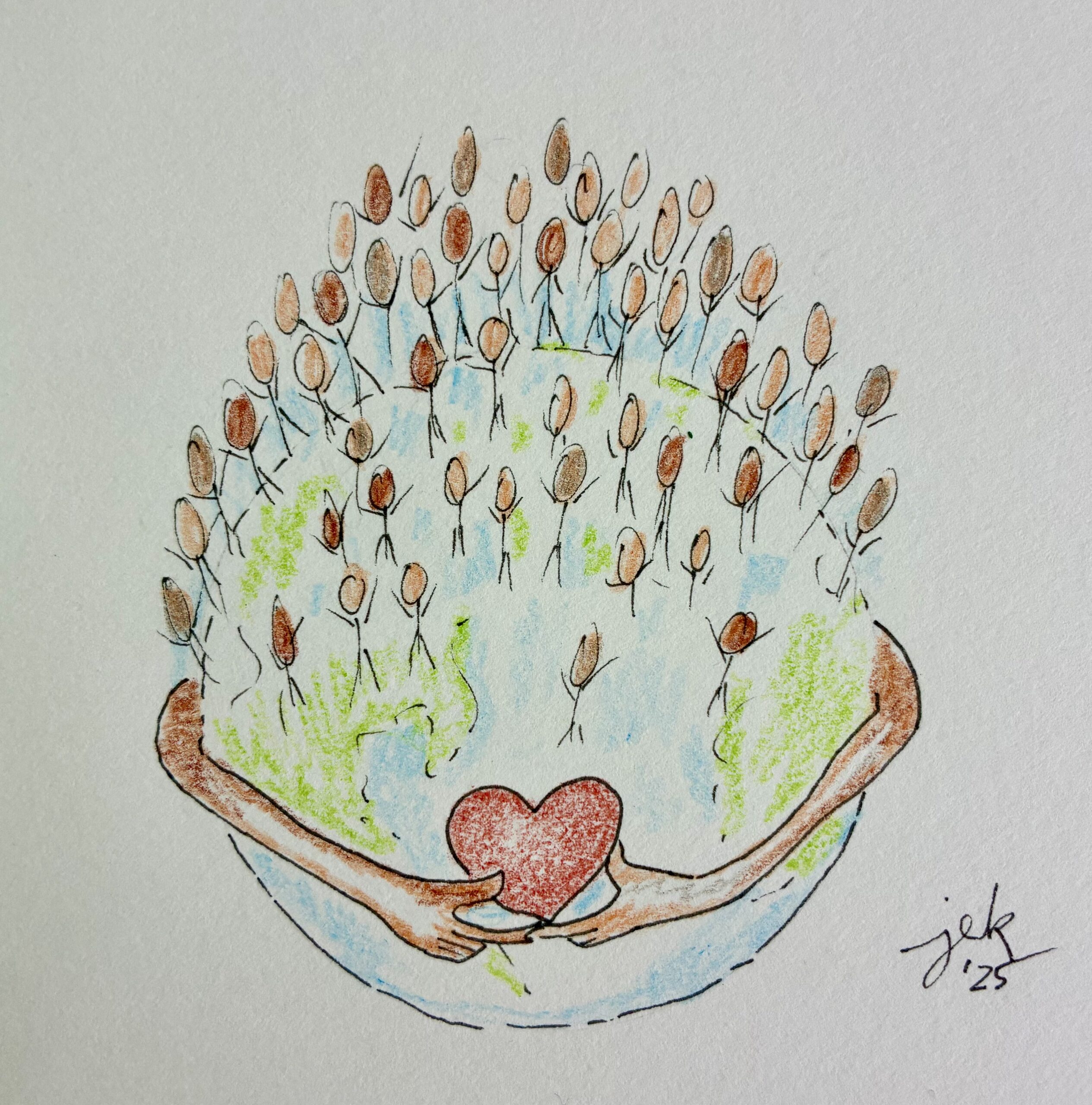
I define the group soul of now to be the collective soul of all individual souls currently extant in human form on planet Earth. We are the brain center of the Earth, afforded the free will to impact greatly the fate of this planet.
Of course, Mother Nature, the subconscious powerhouse of our group soul, also has us experience the true karma of our decisions. Optimally, our collective will would harmonize with the greater good for all.
Currently, the group soul of our world is in a process of extreme polarization. Conventional wisdom would have these opposing forces come together to reconcile differences in a process of communication, understanding and compromise.
However, such desired union is not yet prepared for, as the warring elements are convinced that success can only be obtained through the total conquest of opposition. For a harmonious union of opposites to occur at the level of the group soul, we must first discover and reconcile with the opposites within ourselves.
If we don’t know ourselves at the depths of our own inner opposites, we are sure to fall prey to the power of projection, where the problem of opposites is resolved through rejecting our neighbor, our projected, forsaken inner opposite.
Nonetheless, we can take advantage of discovering ourselves through the projections that so powerfully, emotionally seize us. For instance, I might notice myself angered at what I see as a highly manipulative, passive-aggressive move by another person. My anger, if I am paying attention, tells me immediately to look within.
As I do my mental inventory, I might discover my own ego power drive that does not like to lose. And with this insight, I shine a light upon the hologram of self, which reveals to me that in the as without of my projections is also the so within of my own psyche.
My ability to identify the true source of my anger, my own power drive, brings me into greater acceptance of my apparent opponent, as I can now see myself in the other. This does not resolve this inner opposition, but it does truly bring it home to roost.
Self acceptance of the unacceptable within makes it more acceptable to acknowledge that everything we are is the same in everyone else. Wisdom comes in knowing how to live those opposites, as in when and where it is best for them to be lived in our lives.
The more we are able to see ourselves in every attitude that comes at us the more we no longer need to be personally offended by the behaviors of others that we ourselves are quite capable of committing, if only in our fantasies. Fantasizing hating our neighbor is quite a potent form of polarization, within and without.
Anger and hatred issue from the solar plexus chakra, the home of our personal power. Inevitably, from this center we find ourselves in a competitive mode with others. The ability to reach the heart center chakra, the place of compassion, allows us to raise our vibration to the higher level of love, truth and wisdom, which lifts us out of the throes of competition.
The heart center also connects us to the wisdom and guidance of the High Self, that which assures us that there are benevolent forces beyond the ego that are in alignment with the greater good, letting us know that we can let go of the need to control, and be in harmony with the greater good of the group soul.
If we are to truly harmonize with the group soul for the greater good of all, we must innerly disarm from overt or covert hostility. When truly detached we are able to shift our energetic posture from yang to yin.
Yin is a magnetic state that attracts people in a positive way because they can feel that they are energetically being accepted, regardless of their views. A yang state, which is assertive, is, of course, equally appropriate at times. This set of opposites, yin and yang, represent a supreme example of opposites, able to express their individuality when appropriate and join in union—the essence of creation—when appropriate.
All efforts to harmonize the opposites within one’s individual soul are powerful contributions to the group soul of now, as it finds its way to the harmony of the greater good of all.
Keep a quiet heart, solidly focused on what is right for all. When the heart has a challenge, it can always find a way that is positive and helpful. When the heart is centered on love, kindness, compassion and the greater good there is nothing that will get in its way. Train your heart in loving kindness and compassion. It’s all you need.