Category Archives: Jan’s Blog

Welcome!

Archived here are the blogs I write about inner life and outer life, inner nature and outer nature. Perhaps my writings on life, as I see it and experience it, may offer you some small insight or different perspective as you take your own journey.

With gratitude for all that life teaches me, I share my experiences.

Jan Ketchel

A Day in a Life: Peaceful Mind

So Chuck and I have lately been writing about mindfulness meditation with the goal of achieving compassion, for ourselves and others. We both spent some nights dreaming with the Dalai Lama, thought to be the incarnation of the Buddha of Compassion, and indeed his life has centered on bringing the concept of compassion to the modern world. But what about mindfulness, what is it and how does one achieve it?
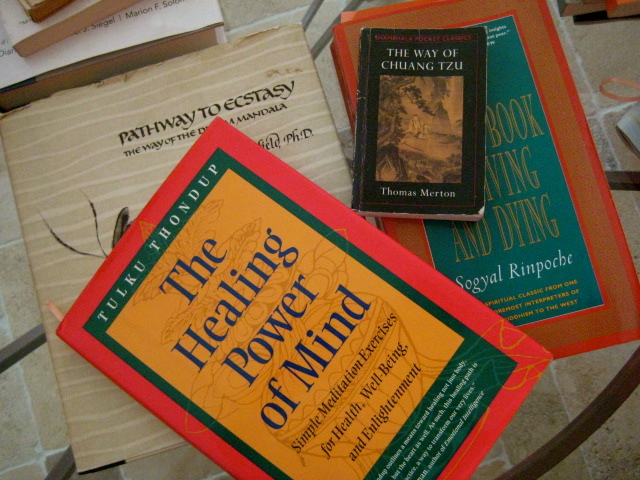
Some mindful reading aids...

I like to think of mindfulness as a practice of achieving a peaceful mind, the true nature of mind. By constantly reminding myself that my life is a journey, and by acknowledging that everything that happens in a day and in a lifetime is an important part of my learning experience, I am able to bring myself closer and closer to achieving the goal of peaceful mind. Sometimes I get there for long periods of time, and other times I may only touch down for a few minutes a day, but the more I remind myself of my goal the easier it becomes to quickly experience peacefulness of mind.

Even during recapitulation, when in the throes of a memory, one can use the practice of mindfulness to ground the self and stay in the adult present self. Reiterating often that life is a journey of self-discovery helps anchor one in reality, even while another part may be experiencing something from a painful past. Mindfulness is that anchor, the anchor of awareness that we are all on journeys, that we are all in our lives to learn something, that we are all sentient beings capable of incredible feats. The first incredible feat is to remember these things, to change how we think about ourselves and our lives by constantly bringing our attention back to these truths. The second incredible feat is learning to let go of what normally fills our minds so that we can rest a moment in the peacefulness of empty mind. Mindfulness is building awareness of ourselves beyond the usual cogitations of the mind, awareness that the perfect state of mind is peaceful. It is what our minds seek most of all.

It is possible to begin training in mindfulness simply by bringing attention to what we are doing throughout the day, staying mindful of the moment. In such mindfulness practice peace exists. Now I am mindful that I am sitting at my computer and writing, but I am also mindfully aware of my breath, of my calm heart, of words flowing out of me.

Calm and empty peaceful mind...letting thoughts go...

In a little while I will make a cup of tea. I will sit calmly with my tea and drink it mindfully, focusing on its nourishment, letting thoughts go as I remind myself that “I am drinking tea, I am drinking tea.” When I take a walk, I remind myself that “I am walking now, I am walking.” I focus on my breathing and my next step, letting thoughts go. As thoughts return, as they always will, I simply bring my attention back to what I am doing. “Oh, yes, I am walking!” When I go to yoga class I calm my mind by saying, “I am in yoga class now, I am present in my body in yoga class.” I constantly remind myself to come back to the moment, to where I am and what I am doing in the moment. In so doing, I allow all else to escape the confines of my mind, leaving room for a few moments of empty, peaceful mind.

This mindfulness practice of constantly re-anchoring in the moment, aids in allowing worry and stress to be absent, however briefly. Given a reprieve it will often leave of its own accord, for in reality it does not exist if we do not give it a home to exist in.

Begin the process of mindfulness meditation in everyday life simply by being in the moment and then re-focusing on being in the moment. It doesn’t need to be something that we sit and do at a certain time each day, though that is perfectly acceptable too. In the end, by simply allowing it to become a natural part of everyday life, it grants us its gifts more frequently. By constantly reminding ourselves to be mindfully aware, we train our awareness to be mindful more often and pretty soon we find that it comes to our rescue when we most need it, such as in a moment of intense recapitulation as I mentioned.

Being able to anchor ourselves in the awareness of now, reminding ourselves of the truths of our journeys upon this earth and the desires of our spirits to learn and grow, helps greatly as we face our recapitulations. The more we are mindful, the easier it becomes to be mindful again and again. One day we might notice just how peaceful our minds are and, however brief the moment may be, take it as a sign of achieving the goal of mindfulness.

Empty mind...

With mindfulness comes compassion; it just naturally seems to lead the way there. We find that compassion does not really need any explanation. One day we just find ourselves experiencing it because we have already taken on the biggest enemy of compassion: the old mind with all of its directives, judgments, condemnations, repetitive voices and tiresome criticisms. By letting it go we become open to new ideas, new thoughts, and incredible feats of mind never before thought possible. One day we find that all of our thoughts are compassionate ones, all of our ideas embrace a new paradigm, encompassing a broader worldview where everyone is equal.

By opening the mind to peacefulness we allow new energy in, and it comes in calmly, aware that something is different now, that the mind is no longer accepting the old way, for it is only interested in peaceful emptiness for all.

Peace,
Jan

A Day in a Life: Creating A Dreaming-Waking Mandala

Dreaming with the Dalai Lama...

I set my intent and then I dream.

For the past week the Dalai Lama has come to me in my dreams. Sometimes when we wake up in the morning Chuck tells me that he has also been dreaming with the Dalai Lama. This is significant. What I am learning from the Dalai Lama is important. He has been teaching me how to handle the energy of now, the pushing, almost volatile energy of late that has been unrelentingly asking us all to face ourselves, what comes to us from within, while simultaneously withstanding the onslaught of the turmoil of what comes to us from without. We have all been suffering lately through the same kind of energy that Buddha encountered during his 49 days under the bodhi tree. And, as Chuck mentioned in a recent blog, the energy is not going to stop, it is coming at us with the speed of light!

This kind of energy circulates through our lives often enough that by the time we are adults we should be pretty used to it, but that doesn’t mean we handle it well. It takes awareness—recognition that we are in this type of energy state again—as well as a concerted effort to achieve balance and calm so we can not only maneuver through it but learn something as well.

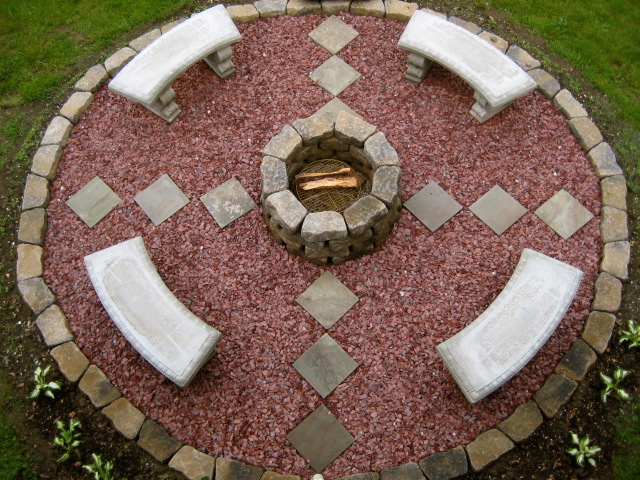
In my first dream, the Dalai Lama handed me a fifty-pound bag of sand. He then instructed me to create a circle with it, large enough for me to walk around in. He showed me how to use the sand to build a little wall, just a few inches tall, sloping upward to a point, as if to create a small mountain range. The point, he told me, was to create a barrier between what was outside and what was inside. I worked on building that wall all night long, getting it just right, refining the edges, perfecting the circle. It was satisfying work and by the time I was done I had created what I set out to do.

The next night, the Dalai Lama came again. This time he instructed me to define quadrants within the circle, four equal areas that defined my life. The first quadrant became my inner world, the second my work in the outer world, the third my relationships with others, the fourth my home and my personal life. These quadrants, he said, must always be in balance.

I constructed a mandala...

When I woke up from the first dream it was pretty clear that the Dalai Lama was instructing me in making a mandala, a dream mandala, I thought. Little did I know that it was more than just a dream manifestation. By the third night I understood that it was a working mandala, merging the Shamanic process of recapitulation with a most important Buddhist practice. On this night, the Dalai Lama taught me about detachment, probably the most important practice in both recapitulation and Buddhism.

On this night, the Dalai Lama taught me that I must constantly utilize and hone my practice of detachment as I encounter the onslaughts of energy that are constantly present, whether from within or without. He instructed me to face what comes to me, to dissect it thoroughly, understand it completely for what it is and what it is teaching me, and then to let it go and move on. I sat in the different quadrants of my mandala and did as he instructed. His hand gestures were always prominent in these dreams, but this night they were broad sweeping movements as he demonstrated pushing the finished product of my inner process away, actually expelling the energy beyond the walls of my mandala. “Be done with it!” he said. “And then move on! That is detachment!”

By the fourth night I was beginning to wonder if he would come back. I wasn’t really surprised to find myself in his company once again. This time he spoke of compassion, instructing me in achieving calm within no matter what came from without, but with gentleness and compassion for myself as I went through the process of detachment. He told me that I had to get to a place of detachment in order to fully understand compassion, and that I had to get to a place of compassion for myself if I was going to truly be able to be compassionate toward others. He told me this was an endless process of facing both the inner and outer world, for there will always be something new each day to figure out and detach from with compassion.

Honing my awareness...

The next night, he instructed me, in a final note, to remember that all of this had to happen with awareness that I—my ego self—was not all that important. What was most important in all of this practice was honing my awareness so that I might also hone my energy. This is the ultimate reason and the goal in life. The daily challenge, he told me, is to face what comes in life in full awareness that it is the path to enlightenment, to full awareness and use of energy. How I express my energy through this body that is me—how I meet others in the world, and how I elect to live my life—all matter.

In essence, the Dalai Lama was pointing out that we are already on the path. We have always been on it. Our path is personally significant; we are the only ones who can walk it, taking the journey that we got. We are all, however, equally outfitted with what it takes to make the trek along that path to enlightenment. As my dream encounters suggest, it just takes utilizing a few practical tools in how to use what we innately possess: the means to achieving full awareness in our dreaming and waking lives.

In my dream encounters with the Dalai Lama, I was being reminded that we all face lessons in detachment in our daily lives, every day. The four quadrants of my dream mandala are the places that my personal challenges occur. But the Dalai Lama was also reminding me that we are all Buddha, going through the same kind of suffering that the Buddha went through in his 49 days of suffering. We must learn the same lessons that the Buddha learned, how to withstand the tension of what comes to us, investigate it—in a deep process like recapitulation, for instance—then let it go having learned what is most important. And then move on. There is always something new to move onto.

I learned, once again, that although the process is endless, the rewards are immediate. Each day, as I move around in my dreaming-waking mandala, I find that as I face what comes, the world without eventually changes, meeting me differently too. Where I am, so is the world. If I am in balanced calmness then I meet similar energy without. If I am avoidant, that too is what I encounter without, avoidant energy.

I have already constructed a magical wall...

One day I may find myself in the relationship quadrant and another day I may find myself in the outer world quadrant. It doesn’t matter where I find myself, the work is the same, to face what comes with awareness that my reason for being here is so that I may evolve. What must I face today and how will I face it? Will I remember that I already built a magical protective wall to hold in the energy that is important and to keep out that which is not?

I must remember that I am well prepared. All I really have to do is set my intent. And what was my original intent that brought the Dalai Lama’s energy into my dreaming-waking life? What it always is: to change. I find that there is really no other intent I need to put out there. Every day I ask to change, to keep changing, for I find there is no end to the magic and awe of life in change. “Let me change,” I ask. “Let me change.”

By constantly returning to my mandala, I am offered structure when I often feel that I have no structure, nowhere to turn, or no anchor. I do have it, a gift from the Dalai Lama himself. His own energy utilized far beyond his own physical body. That is his intent.

I sit in my mandala and set my intent to change. Try it. It really works!

Most humbly offered, with love,
Jan

See also Chuck’s recent blog: Achieving a Quiet Heart.

A Day in a Life: So, What’s It All About?

Is this really what life is all about?

On my father’s eightieth birthday, as we sat around the crowded dinner table, I posed a question.

“Dad,” I said, “you’ve lived a long life, reached this ripe old age of eighty. Do you have any words of wisdom to impart to all of us on this momentous occasion?”

My father looked at me and then glanced around the table at the rest of the family, everyone wondering just what he might say to such a question. His gaze turned to the table laden with food and he simply said: “Pass the butter.”

Laughter erupted, but that was all he said. He didn’t follow it up with a single word and we were left to wonder. Is that really what it’s all about? Pass the butter? Was he telling us that his opinion didn’t matter or that he just didn’t have anything to say about life? Was he suggesting that nothing really matters in the end, that the only things that matter are what comes next? Was he implying that my question was too much to respond to, too impertinent to spring on him like that?

My father was not an outwardly expressive man, kept his thoughts private for the most part, though I always suspected he had a thoughtful, rich inner life, as I expect everyone does. At one time in my youth I had admonished him to quit wasting his imagination on fears and put it to creative outpourings, for I saw, at an early age, how fear consumed him. I knew that in his youth he had been a poet with aspirations of becoming a writer, but those dreams got interrupted, usurped by duties of marriage and family.

As I experienced my father turning from my question that evening at the dinner table, I felt not only a pang of rejection, but, by far, a deeper sense of dismay, for I could not fathom that someone could have lived so long and not been able to speak from the deepness of his heart to his own family. At the time, I was deep into my recapitulation, investigating myself in a most thorough manner, constantly asking myself challenging questions and demanding that I find the answers within. I was learning to trust my heart, turning to my inner self for the answers I sought, and thus I could not imagine that he had not, at some time, done the same. For, as I said, I expected everyone to have a rich inner life. But now I know that not everyone chooses to explore the inner world of the deeper self in quite the same way and beyond that, that many roads lead to a path of heart.

I will turn sixty this year, and I hope that if my children ask me to impart some words of wisdom that I will be as succinct as my father, that perhaps I will be able to wrap it all up in a nutshell and say, this is what life is really all about: Pass the butter. For I think my father’s answer says it all.

He was really saying, without self-importance, without attachment, without needing to uphold anything: This is how I do life, how are you choosing to live your life? And indeed, that is a most private endeavor. Can I be as detached as my father and fully own my own journey, and without judgment let others live the life they choose?

From my father, I have learned that life is not about making a point or being right, or having the answers. Life is really just about choosing how you want to live and then doing it to the fullest. I know that my father lived his life according to his own values, that he made choices in alignment with what he felt was right. He was extremely honest, hard working, dedicated to serving others less fortunate, though he himself was not well off by any means. I know that in his own way he lived every day from a deeply caring place and that he gave without asking for anything in return, only that justice be served, that right be done, knowing that everyone matters. A man of few words, he expressed his inner life in his everyday actions, traveling a path of heart, giving wherever he met resonance in the world.

So, what’s it all about? I fully agree with my father. Life is just about choosing how to live and then living that life to the fullest, in whatever way is right for you.

Pass the butter,

Jan

A Day in a Life: Habits

The wrens are back and so we know that the weather will now be milder. They’ve moved into one of the bluebird boxes, crammed it full of sticks and straw, and wake us each morning with their noisy, boisterous chatter, so loud for such tiny birds. The other bluebird box has been occupied by a pair of bluebirds for several weeks now. They came in March and we watched them flit about checking where to nest for quite a while before they decided on the box furthest from our deck. It’s an annual event around here, waiting to see who will occupy which nesting box.

The predators will come...

The robins have also returned in force. Though we can’t be sure, it appears that the same robins are building nests in the same areas again. I am fascinated by their ability to forget what transpired in the years before. The robin family that got devastated by a snake creeping up the small ornamental maple and snatching all but one of the fledglings has moved back into the same tree. Go figure!

Another set of robins made a nest under the deck last year and have done so again, in spite of the fact that they were quite upset at our backyard activities and spent the greater part of the summer contending with us humans. This year they have moved even closer to the backdoor and every time it’s opened the mother flies off the nest in a screaming panic. We had watched the nest building along the main beam there for a few weeks as several decoy nests appeared before the final one was completed.

We’ve noticed how birds never fly directly to their nests but have a way of deflecting attention by taking circuitous routes, but once they set up their flight path they never vary. Go figure that one as well! It’s not that hard to find their nests at all.

On the other hand, I am so grateful for nature trusting us by repeatedly coming to our yard. We have made it comfortable and inviting, nothing is discouraged or turned away, everything is acceptable, that’s just the way it is—Oh, except for the poison ivy! But overall, it’s been gratifying to have front row seats to the unfolding of life, to watch the comings and goings, receiving valuable lessons on a daily basis.

Habits is one of the lessons that comes to mind as I watch these annual nest buildings. Even nature has habits and behaviors as potentially harmful as we humans do, so I don’t feel so bad. Picking the same spot to nest year after year, in spite of what has come before, suggests that all of life has the same tendency to forget, to stay with the known, to just do what generations have done in spite of the known risks. We humans do the same.

As I watch the birds reacting to imminent danger, I find myself appreciating their immediate response, often a shriek or cry and then nervous fear, just like us. Flying about in a panic before finally deciding to attack is quite often the case, seeking to deflect attention from the nest by creating a fuss, but once the predator has its eyes on the nest no amount of fuss will draw it away. The tender young are more inviting than the distraction of a fight with the parents. A predator will do what it can in order to get what it wants, just like us.

Are the birds really that ignorant, forgetful, self-deceptive? Are we? Yup, I think so. Along the lines of making changes in our own lives, we too must contend with the forces of nature, both inside and outside of us. As we seek to shift ourselves out of our usual patterns of behavior and attempt to do something really different and evolutionary, we find that our foes are often as formidable as the predator coming to steal from the robin’s nest. Such a foe is not easily distracted.

Nature, at least nature in my back yard, shows me each year that it has a plan and it sticks to the plan, no matter what. It has enough energy that it can afford to lose countless chicks and whatever else to the predators that will naturally come seeking sustenance and it will continue to produce life in the same manner—no matter what. It goes on doing what it has been doing for eons. We humans, however, have something else in us that makes us stop and look at ourselves, our habits, our tendencies. We have something that makes us question our behaviors, something that says, “hey, stop that, do it differently,” and this is what gets us in trouble, but what also evolves us.

Nature in balance...

Nature evolves slowly, very slowly. Man evolves quickly, very quickly by comparison. As I write this, I look out the window and see the pesky squirrel digging up yet more of the peas I have planted. I am guilty of habitually doing what I see the birds doing and the squirrel predator has obviously been watching me as closely as I watch the birds. Last year I was quite successful in getting my peas planted undetected and we had a good crop. This year I have been planting and planting only to discover, each morning, that something has been digging up the nice plump pea seeds and leaving deep holes in the soil. I have suspected a squirrel and yet I have just gone on planting, thinking that the squirrel will forget about my peas after a while. But today I see that there is no way that squirrel will forget, for it is nature doing what nature does best, returning and doing the same thing over and over and over again. I guess that bodes well for nature, but it does not bode well for my pea crop this year!

Rather than fighting nature, I’m letting the squirrels have the peas. I’ll settle for other crops that are coming in nicely, planted a little earlier because of the warm spring. It looks like I will have enough food from my garden this year. I can share some things with nature because I just don’t need more than I can consume. I don’t need abundance; I just need enough.

In the meantime, I ponder my own evolution. Am I really doing anything different? Am I just another creature of nature and habit? Do the birds and squirrels have an inner world as rich as my own? Are we humans really all that unique? In the end we are all of us—birds, squirrels, humans—just different forms of energy, inhabiting this world for a time, but I am intent on maintaining my awareness beyond this world, and so I remain alert to what is around me, aware of the passage of time and the seasons, habits and processes, learning what I can.

The Shamans and the Buddhists suggest that we use our time to hone our awareness, using both our waking time and our dreaming time to prepare for our evolution from this life, so that we can learn to stay awake when we die and not miss a thing. We are all beings who are going to die, but in the meantime we are also all beings who are offered the opportunity to truly live and grow our awareness. How we elect to do that is extremely personal and it can take us a long time, the natural time it takes for us to reach a level of awareness that life is more than just what meets the eye.

There will always come a time when we have to make a decision. Do I return to the same place and do the same thing all over again, knowing full well the consequences of my actions, or do I do it differently? As humans we can change any time we want, simply by doing so; by choice and will and patient practice we can change. Change takes action and acquiescence, acceptance and daring, letting go of something while embracing something new. There is always a give and take. Sometimes we might think we are losing something precious but we discover, eventually, that we have gained something even more precious, but it’s only in taking action that we will discover this.

During this time of year, the pagan feast of Beltane—of nature’s passing from one time of year into another, of birth and rebirth—is celebrated, but in reality we have the opportunity to rebirth ourselves into new life at all times. It’s pretty daring to be that way, to confront both the self and the world, asking for new life.

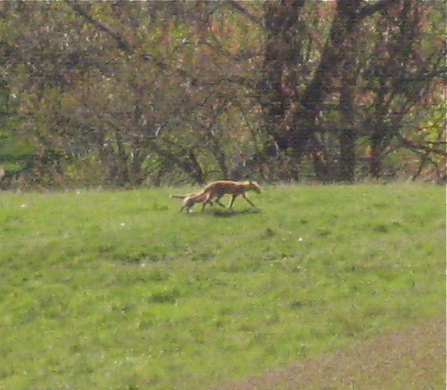
Like the foxes...just passing through...

Although Jeanne and Infinity, in Monday’s channeled message, suggested that the world is far-gone now, I did not feel that meant nature, but only that it meant the world man has created. Nature, as I see every year, will continue doing its thing, just as we will. But, as conscious humans, we have the opportunity to do our thing differently, because in the end it’s our world that is now impacted rather than nature’s world. Perhaps it’s time to admit that we just didn’t get it quite right, to take stock of what we really value and really change now how we live.

Can we live in symbiotic balance with nature, knowing that there will be enough for us? I know that I will survive on what is in my yard, that flowing with nature means that I must stop fighting it and stop taking from it. It means being as simply and straightforwardly natural as the critters in my yard, by giving and taking with full human awareness that I am only passing through.

Just deciding how to live and give, most humbly thankful and grateful for all that I have,

Jan

A Day in a Life: The World’s Biggest Baby—A Fairy Tale

A fairy tale house in the woods...

Once upon a time, there was a little girl who lived with her mother and father and many siblings in a house in the woods. Each morning before dawn the father would get up and go to work at his job in the city and he would not return again until after dark each night. Every day the mother stayed at home with the children. The children were quiet and obedient because that was what their mother expected of them. Anyone passing by the house in the woods would never have known that the house was filled with children, for they never made a sound, they knew better. That’s just the way it was.

One day, when the girl was nine, her mother locked herself in her room and would not come out. The girl could hear her father at the bedroom door pleading with the mother to come out, to not be angry, but the mother only screamed that she would never come out! The little girl went to the door of her parent’s bedroom and, pushing her father aside, told her mother to come out at once.

“We need you to be our mother,” she said, but the mother refused. And so the little girl became the mother that day. She took care of the other children, cooked for them and her father, cleaned the house and went to bed an exhausted little mother. The next day, to the little girl’s great relief, the mother came out of her room and carried on as if nothing had ever happened. That’s just the way it was.

Not long after that a new baby was expected in the family. The little girl was very excited about this new baby. “When will it be born?” she wondered. “Who knows,” said the father. There were many emergency trips to the hospital, but the mother always returned home to wait a little longer for the new baby to come. One night, the father told the little girl that he was taking the mother to the hospital again and that she was in charge of taking care of all the other children until they got back.

The next morning the little girl woke to hear her father coming in the door, looking tired and bedraggled. “Is there a baby?” the girl asked, all excited. “What was it? A boy or girl?” The father, in a dead tone of voice, as if it were not the most important and exciting thing in the world, simply replied, “Oh, a boy.” And he went into his bedroom and fell fast asleep on his bed while the little girl kept everyone else happy and quiet. That’s just the way it was.

Later in the day, when the father awoke, the little girl asked him questions about the new baby. “Where will it sleep and where are its clothes?” she asked, for she saw that no preparations for this new baby had been made. She made the father climb the rickety ladder to the spider-filled attic and get the old, dusty, baby bassinet down. She told him it had to be cleaned and when he stood there helplessly, his hands hanging at his side, doing nothing, she took over. In spite of her fears of spiders she cleaned and scrubbed that bassinet until it shown. After that, she found sheets and baby blankets and made it up so the new baby would have a place to sleep. Next, she asked the father to help her find the old baby clothes, but he did not know where to look. “Don’t worry,” she said, “I’ll take care of it.” And so she did. The girl did all of this because she knew if she didn’t no one would, and that’s just the way it was.

On the day the new baby came home from the hospital, one of her brothers claimed him as his own, for the baby was coming home on his birthday. The little girl let this pass, knowing that the baby was really hers, for she was the only one preparing for its entry into the family and she felt a special bond and great tenderness for this new baby. She vowed that she would be a good big sister to it and so she was.

Pouty big baby...

As time went on and the girl became more observant of the family dynamics, she began to notice that the mother had many tantrums, that she spent a lot of time fuming in her room with the door locked, that she rarely left the house. The girl noticed that she was not like other mothers. It was extremely rare for the mother to attend a school function or accompany her children to extra curricular activities or even encourage them to express themselves. She liked things to be predictable, her children to be quiet and everything perfect. She did not like others to ask things of her, but if she wanted something she demanded it be so, and so it was.

The mother did not drive and so as soon as the girl got her driver’s license she became the mother’s chauffeur, taking her on trips to visit people and places at the mother’s whim, sometimes great distances away. She took care of the younger children on these trips, keeping them quiet and preoccupied while the mother attended museum exhibits, tea parties and bridge club meetings, while the father was away in the city. The girl accepted these assignments, because that’s just the way it was.

The girl grew up and left home. With great relief she left the house in the woods and all her duties as little mother and went off on her own adventures. Eventually, she got married and became a mother herself. Whenever she took her children to visit their grandmother she took note of how distant and uninterested the grandmother, her mother, seemed to be to the people around her. Her interactions with her grandchildren were brief and then she’d shut herself off in her own world, literally turning her back on those around her to pick up a book or disappear into another room. “That’s just the way she is,” the girl thought, “it’s how she’s always been.”

After the girl’s father died, the elderly mother grew increasingly dependent upon her daughter. The girl began to remember her life as the child of this woman as she took on the role of chauffeur once again. Without complaint, she quietly attended to her mother as she had once done as a child and teenager. One day, as she was chauffeuring the mother around as usual, the girl, to make polite conversation, asked a simple question. The mother, for some unknown reason responded with an angry retort which escalated within seconds into a full blown tantrum. Screaming at the girl in a bitter and condescending tone, insinuating that she was a stupid idiot, the mother unleashed a fury of pent up anger. The girl, much taken aback, looked at the mother as clarity struck. “Oh, My God!” the girl thought to herself. “You are the World’s Biggest Baby! You are a f***ing big baby!”

The World's Biggest Baby

A voice in her head told her to let this truth stand, and thus she refused to take responsibility for her mother’s outburst. She did not allow herself to take the insinuation personally, nor did she make excuses for her mother as was her usual tactic. For rather than let herself feel the full impact of the mother she had gotten in life, she often toned down the reality of who she really was, sensitively striving to see her as just another human being struggling to make sense of her journey. But this time the girl let the full impact hit her: her mother was indeed the World’s Biggest Baby, she always had been, and she was not a very nice person, either! And that’s just how it was!

In a rush of insight, her whole relationship with her mother suddenly made sense, her whole upbringing and her childhood in the house in the woods made perfect sense. She had indeed been the little mother while her own mother lived out her entire life as a big baby, tantruming, demanding and refusing to grow up.

More fully liberated from this big baby mother than ever before, she continued to chant, first silently to herself and then out loud as she drove away from her mother. “You are a big baby! You are the World’s Biggest Baby!” Shouting it out for the whole world to hear, she drove down the street happy and free at last, knowing that it was just the way it was!

The moral of the story is, don’t get caught in thinking that you have any responsibility for how your own mother acts in the world, for she is living out her own necessary life and—until and if she chooses to change—she will live it to the fullest. She may, in fact, just be another World’s Biggest Baby! And that may just be the truth, the whole truth, and nothing but the truth!

Just telling the truth, like it is,

Jan