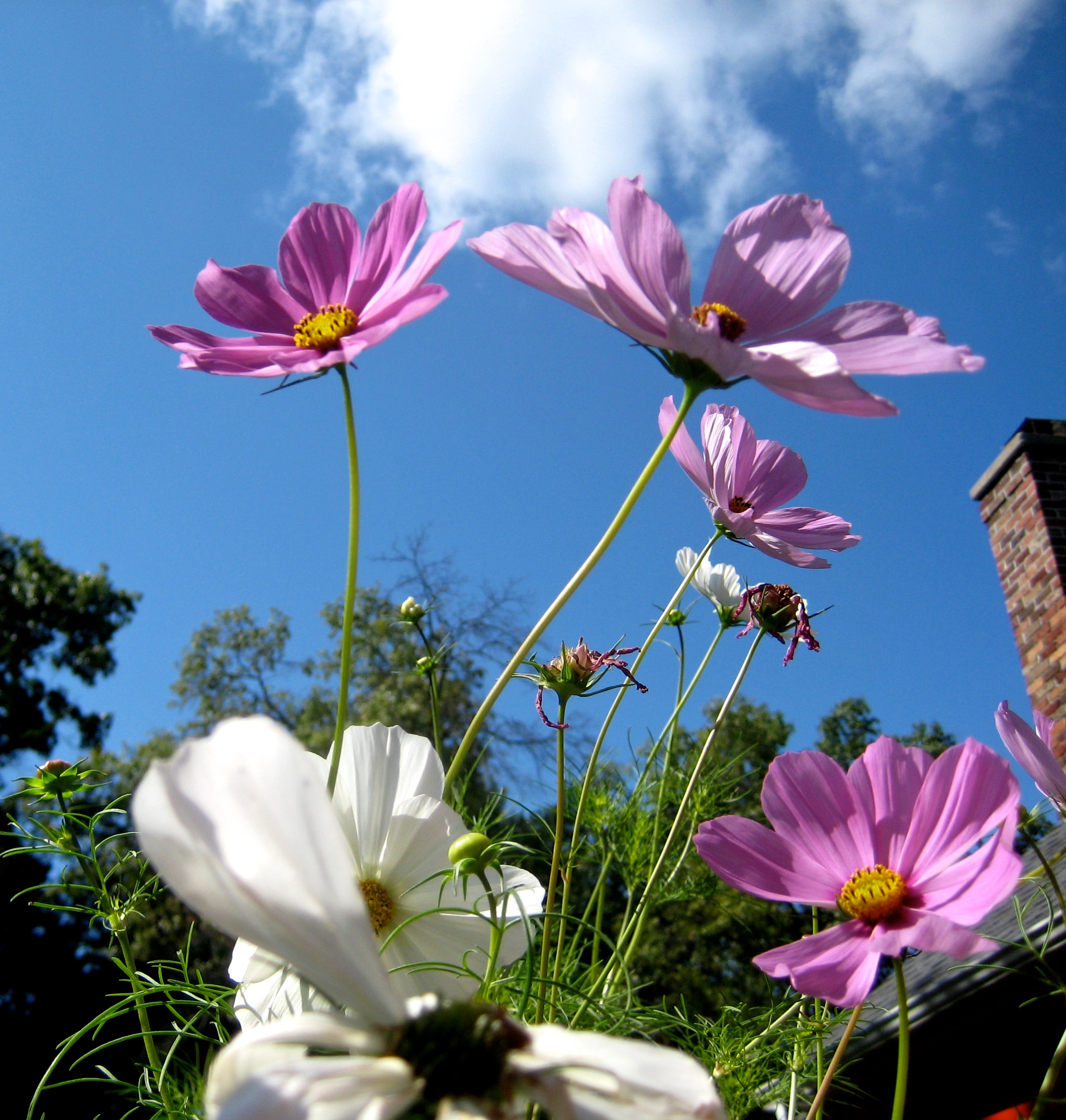
We are here to grow and blossom! – Photo by Jan Ketchel
We start off the week with today’s Soulbyte, posted below, and this impassioned audio message asking us all to take responsibility for ourselves in a new way. Are we really here by our own choice? Hmm? Something to consider as we go into this week that culminates in the January 20th inauguration of our next president. Look for a blog by Chuck on Wednesday addressing some unique views on that event.
The highest form of love is love without condition, the total embracing acceptance of all that we are.
This is the welcome that we all seek as our birthright into life in this world, loving acceptance of all that we are, simply because we are. This is the love the child longs to see mirrored in its parent’s eyes to help fortify a deep sense of worthiness, confidence, and lovability that encourages the journey to individuation, to becoming all that we truly are in this life. This is the love we seek in partnership, a loving embrace of all of our body self, all of our virtues as well as all of our sins.
Shadow partners… – Photo by Chuck Ketchel
In our time, the longing for unconditional love has come to be felt as an inalienable right, an entitlement. If one does not experience unconditional love immediately one feels empowered and righteous to end a relationship or marriage rather quickly. However, relationships are cauldrons where confronting the unacceptable, in both self and other, is part of the process of growing. If one exits a relationship due to unmet acceptance too prematurely the opportunity to experience the coveted “unconditional love” may be missed.
The first challenge in achieving unconditional love is to unconditionally love the self. The process of socialization we all encounter growing up leaves us with a huge shadow self, a rejected part of the self that we are taught must be forsaken due to its unacceptability.
Do we know that shadow self? Do we hate it as it has been hated? Do we expect a partner to remedy our disdain for a part of ourselves that even we do not love, expecting another to lovingly accept all of us?
Can we actually turn over that unwanted shadow self to another to make it wanted? We can try, but we’ll never fully believe the outcome. Even if a partner claims love for that which we hate in ourselves, it will not be redeemed. We will either need constant reassurance to silence our inner doubt or we simply won’t believe our “naive” partner. We will retain the “true knowledge” of our unacceptability.
In other ways, it might just be that parts of ourselves deemed unlovable might indeed be immature, with a limited capacity for relationship. Young children are far more concerned with themselves—primary narcissism, it’s called—than the needs of others. This may be quite appropriate at an infantile stage of development, but it is hardly adaptive to adult relatedness, which requires a fuller knowing and appreciation of another, as well as of self.
Our challenge might be to love that very infantile part of ourselves but realize that it is also anachronistic, non-adaptive to adult life, and unacceptable when acted out in adult relationship. This may be a case where we need to access the loving but firm adult/parent within ourselves that sets boundaries upon the demands of an infantile part of ourselves. This may allow for adult connection with another where we can share the fullness of ourselves but don’t burden the relationship with expectations that need to be grappled with within the self.
When Buddha speaks of loving compassion he speaks equally of detachment. Unconditional love—acceptance of all—does not mean attachment to all. (Attachment in this sense meaning having to engage in the acted-out entitlements of another.) In detachment, we can fully love and accept another yet insist that they manage their own infantilism.
Unconditional love is not unconditional license. Unconditional love is full acceptance of what is, while assuming full responsibility for integrating it into the self and into life at a level where life can receive it and help it to grow. Ironically, the key to unconditional love is complete loving acceptance of self while facing the conditional reality that we must grow up!
If we have been failed by those entrusted to connect us with unconditional love we must pick up the mantle of finding our way there on our own, beyond blame and bitterness. Our truest parent, Mother Earth, entrusts us with this journey as she evokes a healing process that requires deeper connectedness and love for that which has been rejected. If we are here we have been invited to partake in this great healing crisis, our own and that of the world now. It all begins with the journey of unconditional acceptance of the self.
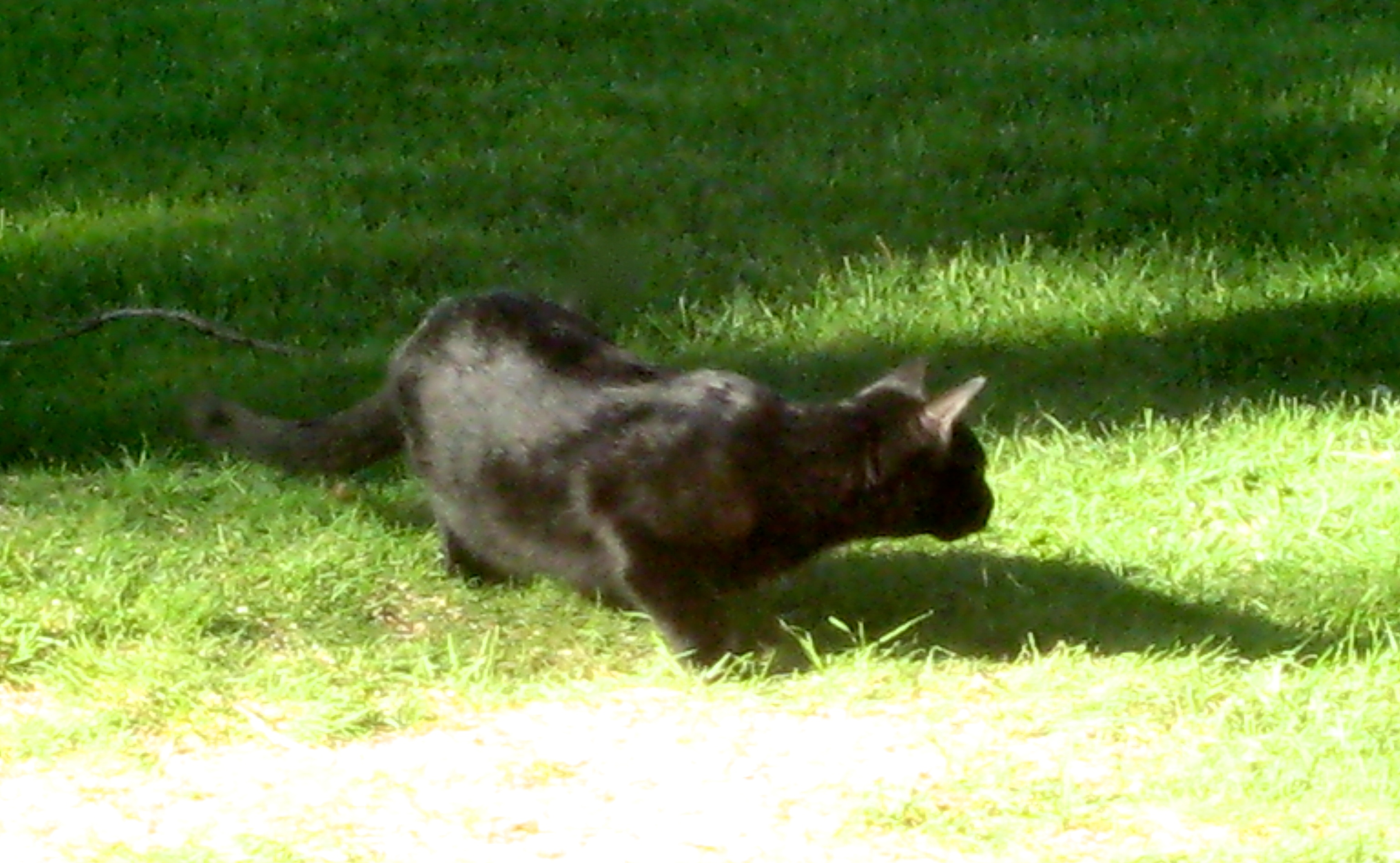
When we love our pets we are also loving the animal in ourselves. Our pets do not communicate in words, but they do communicate deeply. Though we may never share a verbal dialogue, our ability to love and be loved by our animal friends may be deeper and more trusting than any human relationship we experience.
The hunter acts instinctively… – Photo by Jan Ketchel
When there is danger or cause for concern our animal friends alert us long before our own consciousness comes on line. The human animal has been sent to civilized behavior school for centuries, the curriculum of which has trained the human animal to suppress its natural instincts. Such training includes learning to dissociate from feelings and emotions, such as anger or intense joy. In fact, some schools advocate the complete suppression of any emotional expression, even sadness, with its physical concomitant in the release of tears.
The sex instinct is still a taboo topic in families and schools, and though it comes on line for all humans it is very awkwardly integrated and frequently dissociated from satisfying human experience. The hunger instinct has long been expropriated by the marketplace, deeply disconnecting the human from its true dietary knowing. Similarly, the instinct of self-preservation has been confiscated by a gun lobby that can only find safety in weapons.
So what has happened to the animal in the human? It appears to be socialized out of existence, but is it really possible to totally lose connection with our animal selves?
Though our pets can and do provide us with a projected connection to the animal in our nature, the animal inside us—though it may appear to have been tamed into oblivion—is still very much alive, residing in our physical body with all its instincts intact, deeply buried though they may be.
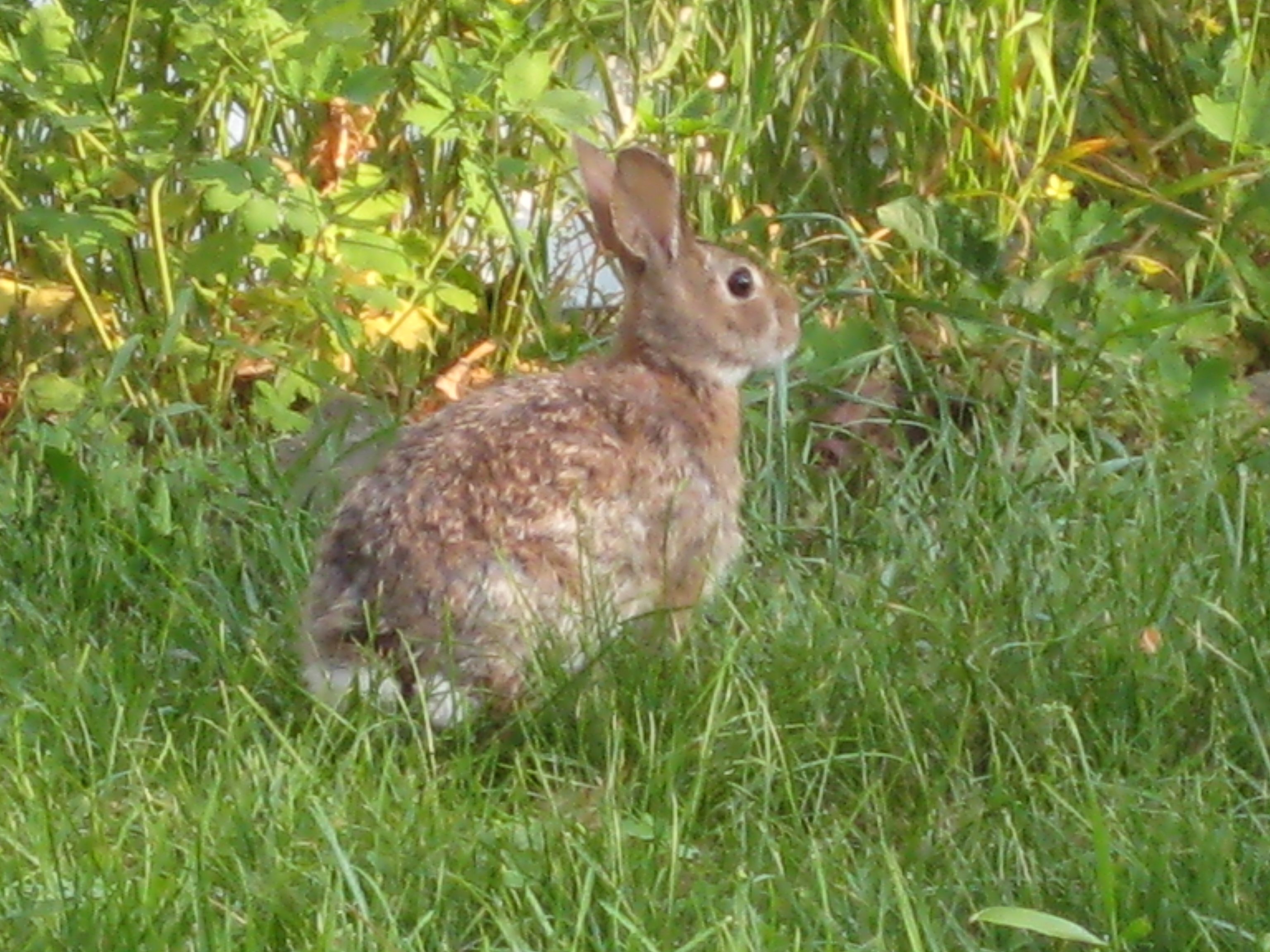
When the animal in us becomes frightened it will instinctively react like all other animals; it will freeze, run, or prepare to fight. These options are signaled by the physical sensations we experience in the form of anxiety, paralyzing fear, racing heart, physical constriction of muscles, and shallow breathing. An acute form of vigilant heightened awareness may also activate, as our animal ability to sense the slightest movement or sound informs our animal self of danger that threatens our lives. This heightened awareness might also be accompanied by extreme calmness, as we prepare for our next move devoid of anxious distraction.
Scared bunny rabbit… – Photo by Jan Ketchel
In our civilized modern world these physical reactions to threats may be perceived as overreactions, but in spite of all the training it has received the animal in us will automatically react as it always has—instinctively. To the extent that we have been able to suppress our instinctive animal selves, and turn instead to our well-reasoned minds, we may be in a position to act in what is deemed a more appropriate civilized manner when threatened, however, this leads to great internal disharmony and may be detrimental in the long run.
Often, our socialization has been so successful that we don’t even know we have these instinctive reactions, and this is often deemed a sign of maturity. Unfortunately however, more often than not, our completely dissociated animal self takes up residence in the shadow of the unconscious where it lives and acts outside of awareness in the body self, becoming physical symptoms and diseases.
Many bodily symptoms attributed to stress might actually be housing our instinctual reactions to everyday events in our lives. A car quickly approaching from the rear might be experienced as an imminent attack. A criticism from a colleague might trigger rage or terror at the possibility of loss of job/food source. A smile from an attractive person might trigger intense desire or just as easily flip into sheer terror.
Prior encounters with trauma may have put the animal self on constant vigil, seeking to preserve life itself. Approaching the body self with consciousness may be akin to approaching a frightened dog. Consciousness must be patient and gentle, cautious to not excite the defensive aggression of a threatened animal.
Consciousness integrates everything in the light of day… – Photo by Jan Ketchel
Consciousness may be very threatened by the emotional intensity of its instinctive self. Consciousness needs to approach these intensities slowly, over time, allowing itself to not be put off by the depth of its feelings, formerly unknown and suppressed. Consciousness is also likely to encounter its own negative judgments toward its body and the instinctive self it was socialized to reject and disown.
Ultimately, the goal is for consciousness to respect and integrate its animal self, seeking to appreciate its reactions as natural, but also to guide its awareness so the animal does not get caught in assessments not accurate to the modern world. Working collaboratively, the conscious and instinctive selves can inform each other of what is happening in ways that lead to deeper fulfillment of instinctual need, as well as a heightened ability to act based on true needs.
Encountering the animal and welcoming it into the fold of self leads to individuation and wholeness of the entire human being.
What is that mysterious thing that we are struck by? – Photo by Chuck Ketchel
Magically and mysteriously we are emotionally struck by and drawn to the energy of another. That being, whom we hardly know, ruptures our emotional, mental, physical and spiritual homeostasis. We become riddled with fear, obsession, anxiety and awe.
This experience is not under conscious control; this is a seizure of the ego by energies much deeper and infinitely more powerful than our meagre bastion of rationality. We cannot talk ourselves out of it; we are drawn to it like a moth to a flame.
The energies that take possession of us are the energies of individuation, the deepest truths of who we are, driving us to rapturously discover our wholeness. However, these energies require the full participation of consciousness if we are to truly become fulfilled in our human form. In mandala terms, we must consciously “square the circle” if we are to become our wholeness. We begin to square the circle by becoming aware that we are in a state of seizure.
In a state of seizure our unconscious energies have bonded and melded with the energies of another. That is the inner experience and sometimes it is the outer experience as well—sometimes two people meet in an equal state of seizure. More often, though the inner experience is compelling, the seizure is one-sided. We are blindsided by the unconscious power of projection that mysteriously binds us with the soul and substance of another being. It matters not whether the experience is one of adoration, exaltation, love, or utter disgust—we are mysteriously and inseparably enmeshed with this other being. We are completely distraught, as a vital part of our own living essence walks freely and separately in the world apart from us in this other person. Our minds and hearts obsess as we fear the loss of our soul.
Our projection might be something else entirely! – Photo by Jan Ketchel
Though that person may be on the other side of the earth, though they may not even know we exist, it matters not; we are inseparably entwined. Years might pass, but our utter devotion to this soulmate is undaunted. Time is meaningless in our timeless commitment to this transcendent experience; and that experience allows no other soulful being in. We may even marry another, but our soul remains faithful to its nemesis, on the deepest level never embracing our official partner. Such is the mystical participation of our soul with its chosen other.
Consciousness of our state of seizure cannot change the power of our unconscious emotional bondage, but it does afford us the ability to not blindly act in accordance with our unconscious mandate that lies at the root of our passion. The decision to hold back an action may throw us into great despair, or even depression, as the unconscious reacts by withdrawing its energies from even the simplest tasks of daily life. But such a decision does affirm our intention to act responsibly and with consciousness, even if it means banishment to the desert for a spell. The goal here is to establish a conscious relationship with the unconscious, based on a partnership versus a blind allegiance to the dictates of instinct and compulsion.
For consciousness, the task is to unearth and resolve the reason for the compulsive, mysterious tie to an other. This might mean facing issues from earliest childhood or deep woundings from other times in our lives, asking the inevitable questions that might lead to conscious clarification. Why has the unconscious chosen this being? Why am I being asked to take this journey with this person? Why is the unconscious insisting that something about this person so mirrors something about myself? Am I willing to take this journey and consciously face the facts as they unfold? Do I need to completely oppose the outer journey, and cloister myself to a direct inner encounter with the root of my desires?
Participation mystique, ultimately, is the language of the unconscious. It engages us in entanglements with beings in the world whom reflect the jewels of our own wholeness. If we read this language concretely, and passionately act out its energies as they possess us, we are strewn about the ocean waves without the benefit of a navigating vessel.
Consciousness gives us our vessel to navigate the ocean of infinity with. Consciousness gives us the choice to learn our lessons in the outer world or in the inner world. Consciousness allows us to shorten our terms of bondage to obsessive projection. Though we can’t consciously lift the obsession, we can oppose blind allegiance to it, whereby introverting the playing field and allowing for symbolic resolution within the self.
The alchemy of love… – Photo by Chuck Ketchel
Ultimately, love is a conscious process. True, the energies of the deepest human needs must enter a love relationship, but passion without consciousness can never equate to love. To be free to love, we must first be freed of the lessons of compulsion, that which is mysterious participation without consciousness.
Obsessions eventually lift as we integrate into our wholeness our genuine ability to love and be loved, as we square the circle of our being with consciousness. The unconscious will always communicate its secrets, but as full-fledged conscious partners we are freed to mystically participate in ongoing adventures of life and love.
From the mystique of it all, Chuck
Note from Wikipedia regarding what Carl Jung said about the subject: “PARTICIPATION MYSTIQUE is a term derived from Lévy-Bruhl. It denotes a peculiar kind of psychological connection with objects, and consists in the fact that the subject cannot clearly distinguish himself from the object but is bound to it by a direct relationship which amounts to partial identity. (Jung, [1921] 1971: paragraph 781).”
The seeds of who we might become… – Art by Jan Ketchel
Individuation requires the full realization of the seed of who we are. As the seed cracks open and begins its arduous journey upward, through the darkness of the earth, it encounters many obstacles on its voyage to the light of day.
Each seed will have a different journey, be it to stressfully twist around subterranean boulders or to find a quick ascent through loose sandy soil. The journey of each seed will uniquely shape its unfolding individuation. The journey of the seed cannot be separated from its flowering; every step of the journey must be accepted and included for the full realization of the individual. To reject any part of the journey is to literally cut off a limb of the truth of who we are and the truth of our complete journey.
Trauma is a crushing blow to a growing seed. Trauma will impact the journey to the light. However, trauma is a legitimate part of who we are and must be honored and welcomed into the fold of our wholeness if we are to achieve individuation and fully flower. Ultimately, acceptance means welcoming every part of our experience into our wholeness with open arms.
The challenge of acceptance is to allow all of our experiences to be fully known to ourselves physically, emotionally, and cognitively. The journey of trauma frequently requires us to shut down the knowing of our experiences so that we may continue to grow our infrastructure according to the dictates of the seed. At a certain point, however, the unfolding of the seed will require that we use our developed infrastructure, or adult self, to recapitulate the experiences of our lost self in order to gather our fuller self to take the next turn in the journey deeper into life, toward our fuller flowering.
Carlos Castaneda, of the shamanic world, suggested that we begin this part of the journey by suspending all judgments and allowing ourselves to gain pure access to our tucked-away, unfamiliar experiences as we recapitulate. Full access will require that we allow our instinctive self to come on line and reset our central nervous system. Peter Levine and Francine Shapiro, of the world of psychology, have made great modern strides in methodologies that value and access the body’s innate ability to both a) reset itself once consciousness is gained and strengthened enough to assume responsibility for lifting its old defenses and to b) fully join the deeper process of reconciliation.
Recapitulation means facing our fears and resolving them… – Photo by Jan Ketchel
During recapitulation, the body will take us on a journey of physical sensation as it relives and releases from its frozen moments of trauma. The heart will release its sadness in tears and rages, in silent or violent gestures and screams. Our minds will clarify ancient frozen negative beliefs as we reset with the truth, aided by the fuller perspective afforded by the joining of the adult self with its younger frozen counterpart.
Popular concepts like “Letting go” and “Forgiveness” attempt to capture this process but actually miss the mark. Simply letting go and moving on offers no deeper compensation or healing value, as our deepest core issues, if not resolved, will lie festering, inhibiting fuller flowering and enjoyment of life.
During recapitulation nothing is rejected or reframed for more compatible digestion; all life experiences are equally valued and accepted as truths of our personal history, as valid parts of our individuation process—no regrets. Regrets alert us to issues of non-acceptance, signaling the need for deeper recapitulation.
Forgiveness presumes we hold some power over another’s journey that should be released for our own healing. All beings must reconcile with their own truths. No one can release another from the full burden and encounter with their own actions. The true mechanism of healing is to release the self of the burden of another person’s journey while fully reconciling and owning one’s own.
While fully accepting the impact of another upon the self, the energy of the other is released back to the other to reconcile for themselves. There is no obligation to that other. However, full completed release requires that there be total transparency and no emotional attachment to the events experienced with that other person; the truth simply is what it is. Full acceptance leads to emotional neutrality and the freedom to really move on.
Our full flowering potential awaits! – Photo by Jan Ketchel
Just as the shell of the seed is shed on its upward journey to the light, so are all emotional attachments to the events of our lives that have shaped and delivered us to now shed during recapitulation so that we may be fully alive and fully energetically available for the next adventure. The past—fully known, fully accepted, fully resolved, energetically and otherwise—recedes as we are freed to flower and experience the joys of new life.