All posts by Chuck

Chuck’s Place: Compensation

Compensation is the action of balance. In everyday life, we work—we give of our energy and are compensated with wages. Hence our efforts are compensated or balanced by stored energy—money—that we are then freed to use as we see fit.

We are all guilty; we all compensate... - Art and Photo by Jan Ketchel
We all compensate…
– Art and Photo by Jan Ketchel

Psychologically, compensation operates as the balancing agent of the unconscious to our conscious decisions and actions. If we spend our day studious and bored, our dreams may compensate by taking us on faraway adventures. In this way our conscious life is compensated—balanced—by our unconscious adventures.

The more extreme our conscious attitude, the more extreme our unconscious compensation. If we insist on keeping ourselves in flighty behavior, the unconscious might compensate with a bad mood, a depression, or a physical fall, bringing us back to earth.

This same compensatory mechanism operates on the world stage. When the ruling attitudes become extreme in any direction they are compensated by a counter movement of equal and opposite energy that reacts in its own destructive wake.

If we accept the premise that the world is an interdependent whole, then outbreaks of behavior, such as the recent horrific tragedy in Paris, should be explored as a powerful compensation for an equally imbalanced ruling principle, not necessarily within Paris or France but within the prevailing governing attitudes of our times around the world.

I have often proposed in my writings that ISIS is not simply a coincidental acronym for the Goddess Isis, but in fact has become an agent of the dark side of that Goddess, constellated from the depths of the collective unconscious. This would suggest that the ruling powers of our world have gone so far from valuing the sacred feminine Mother Earth that she is now activated, from her destructive side, to bring down the ruling order.

As we face the reality of the condition of our world, where the earth and the environment—the purview of the Goddess—have been completely denigrated, threatened with extinction, it becomes clear how a wrathful Goddess might invoke such ruthless destructive retaliation upon civilization itself.

Of course, this compensation cannot be allowed. ISIS must be stopped. But how? The outrage evoked by the destruction caused by ISIS sounds an appropriate battle cry. Nations will join forces to defeat this devil. But how? Seal the borders? Too late and, furthermore, ISIS infects many homegrown disenfranchised youths who can find no meaning in the world as we know it, though they do find meaning in bringing it down. What battle plan for this insidious entity?

We must face the individual shadow to destroy the collective shadow... - Photo by Jan Ketchel
We must face the individual shadow to face the collective shadow…
– Photo by Jan Ketchel

Every individual is a hologram of the entire world. Each and every one of us, in the microcosm of our lives, has a ruling ego attitude that is being compensated by our unconscious forces. Each and every one of us must study our conscious decisions and behaviors. Where are we neglecting the true needs of the Goddess? How are we out of synch with Mother Nature?

Are we so obsessed with the digital world—which is a purely masculine abstraction—that we have lost touch with our physical bodies, our true nutritional and self-care needs?

Have we so abandoned our instinctual selves and instead turned ourselves over to the Goddess Amazon.com?

Have we so abandoned human eros and squeezed it into Match and Tinder?

Do we listen to the wisdom of our birthright—our dreams—or have we completely shifted our connection to wisdom to the great god Google?

Are we so enamored by the glitter of consumerism that we cover over true need with empty objects?

We must study the nature of compensation in our own lives. If we are ridden with anxiety, fear, compulsions, and moods, these are compensating clues as to the problems in our conscious ruling attitudes. If we can humbly see the one-sidedness of our ruling attitude and change it, we will change the wrathful compensation of the dark side of the Goddess within.

If the truth is that there are very painful feelings or inconvenient truths that our ego has been avoiding, resulting in dastardly unconscious compensations, if we then turn around and face the unfaceable—mourn a deeply imprisoned feeling, for instance—then we completely shift the inner balance.

If the ego can align itself with the true needs of the self, the Goddess Isis can usher in a renewal, a new stage of fertile creation and meaningful life.

That’s the compensation we must seek now, the compensation of renewal over destruction. We are all empowered, and charged, to arrive at proper compensation within ourselves. This is how we will change the world for the better.

Some day... a world of light... - Photo by Jan Ketchel
Some day… a world of light…
– Photo by Jan Ketchel

Of course, there will be necessary responses to the intolerable violation of innocence in Paris. But if we are not careful we might find ourselves drawn into a purely scapegoat compensatory reaction that actually plays into and empowers the reach of the collective shadow that now threatens us.

If we collectively face the compensatory relationship within ourselves, we can shift the balance of the forces that threaten us and restore calm to the world. Ultimately, love is the key. Love rejects nothing. Love faces the truth, Love restores proper balance. Love is always the answer.

Liberté, égalité, fraternité,

Chuck

Chuck’s Place: Trickster To Trickster

At a certain level of reality, I and We become One. Growth might be defined as an ever-expanding realization of our essential Oneness. In the meantime, we grapple with the discovery, ownership, and coordination of our many parts.

Who is really in charge here? - Photo by Jan Ketchel
Who is really in charge here?
– Photo by Jan Ketchel

Within the self of every “individual” are many parts: some known, many unknown, and still others disowned. Psychology has coined the terms conscious and unconscious to differentiate between those parts that we know about from those that we don’t know about but also are.

At the center of the known self—the seat of consciousness—is the ego. The ego has many “parts,” including the “face” it shows the world, called the persona, as well as a younger child state, and an adult state. Each of these parts has its own ambitions, needs, and motives. Being conscious “parts” allows each of these centers to have relative accessibility to awareness. That is, we are basically familiar with these states of being. They may, and often do, squabble among themselves.

For instance, the persona—the actor that we present to the world—often sees itself as the true self. The fact that I am a psychotherapist is indeed a real part of me, however, it is not the whole of who I am.

In another example, the adult ego, with its capacity to plan, organize, and make things happen, may trump the needs and desires of its child part, who wants to play.

The permutation of struggles at the ego level alone are staggering, particularly when the parts become tricksters in their maneuvering.

Trickster is a character who has an ulterior motive, a secret ambition or intention that powers its behavior. Trickster has little interest in fairness, cooperation, or consciousness. It’s goal is to get what it wants.

Trickster may be intelligent and cunning, or foolish and obvious, but trickster definitely does not play by the rules. Nonetheless, if we are willing to slow down the action and reflect, the trickster in all our conscious parts can be identified and a resolution to contradictory motives becomes possible.

However, when we approach the depths of the unconscious mind the plot thickens, as trickster can allude all but a very determined introspection.

The unconscious mind, all that we don’t know of who we are, is composed of countless layers. The uppermost region houses all that once was conscious but for a myriad of reasons has been erased from conscious awareness. Here we find many traumatic experiences, as well as parts of the ego-potential deemed unworthy of development.

Traumatic parts have a life of their own and often function as tricksters bent on being discovered by the conscious mind. For instance, a news item on TV might trigger an intense emotional overreaction, brought on by a traumatic memory insisting on being consciously redeemed.

Similarly, rejected ego parts—forming what Jung called the shadow—may function as tricksters by projecting a compelling but distorted perception onto the motives  of a friend or foe that actually reflects the true feelings of the rejected inner part but completely distorts outer reality.

As we go deeper into the unconscious mind we encounter what Jung called the anima/animus parts, the contrasexual components of the psyche, unrealized at a conscious level. These parts have their trickster ability to project themselves in powerful attractions to people in the world that distort completely who they really are. These trickster entrapments form the core of many troubled relationships.

At the center of the unconscious mind is the Self, the CEO of the entire psyche. The role of the Self is to establish balance in the entire psyche—conscious and unconscious. The Self is the higher power of the psyche. Ideally, the ego center of the conscious personality will subordinate itself to the dictates of the Self, which has the interests of the greater whole in mind.

Unfortunately, the ego often takes on its own trickster side, subverting the true needs of the Self, using all its power for decision and free will to accomplish its own aims.

If the imbalance thereby generated is too extreme, the Self counters with its own trickster side and generates symptoms of fear in the ego, such as an agoraphobia, where the ego can’t leave the house. To rein the ego in, the Self can also create psychosomatic symptoms, such as panic attacks or physical illness, to interfere with the ego’s willfulness.

The Self might also generate dreams that preempt the ego’s control through a terrifying nightmare that restores the waking ego to humility.

Yup, that says it all! - Photo by Jan Ketchel
Yup, that says it all!
– Photo by Jan Ketchel

The difference between Self as trickster and all the other personality parts as trickster is its selfless intentions. The Self seeks unity and balance as its aim. When the other parts of the personality employ the trickster, it generally reflects a power play to meet individual needs, often at the expense of the greater needs of the overall Self.

The Self is only forced to become the trickster when the ego refuses to listen to its guidance. When the ego, like a good General, looks to the Self as Ruler, the Self responds with supportive guidance, energy, and freedom from symptoms.

So, trickster to trickster, stay in alignment with the Self, a much smoother ride to wholeness!

Bumping along,

Chuck


Chuck’s Place: The Key To Connection

Robert Monroe queries his out-of-body guide:

“Can we meet again?”

All you need do is ask for our help.”

“You mean meditating? Saying prayers?”

The words and rituals are meaningless. It is the thought… the emotion… that is the signal. If the proper signal is given, we are able to help.”*

In this vignette, Robert Monroe is taught that the key to connection with a life-force beyond our physical body lies with the power of our intent. It’s not specifically the words we recite or think but the quality of our feeling and thought behind those worlds that matter.

Always reach out toward that greater mystery... - Photo by Jan Ketchel
Always reach out toward that greater mystery…
– Photo by Jan Ketchel

This quality is characterized by a confidence, a calm knowing, beyond any clouds of doubt, of the existence of a link to a greater mystery that will indeed respond to our innocent asking. It’s not really the technique that matters, but suspending limiting beliefs and opening to the possibility in peace and modesty.

Marie Louise von Franz, Jung’s closest collaborator writes, “Easterners would call that being in Tao. If you are in Tao, that is, if you are in harmony with the deepest layers of your personality, with your totality in the Self, then it acts through you in this way. But you mustn’t have ego intention… with your ego you block this effect. You put yourself between the natural possibility.”**

Transcendental Meditation (TM) has been an effective method to transcend the limits of conventional thought and effect changes in the body not thought possible by mental means. The practice involves a simple relaxation process combined with a special word or mantra assigned to the meditator that is thought to be imbued with spiritual intention.

Many years ago, Dr. Herbert Benson, then a Harvard cardiologist, was able to replicate the effects of TM by utilizing the same relaxation procedure, coupled however with a simple word, like the word “One,” versus a specialized mantra. He titled this method the Relaxation Response. The suggestion here was that results were achieved due to the power of the intent behind the word and not necessarily the word itself.

Many religions suggest the use of codified prayers to connect with saints or the highest deiety. While some individuals may find benefit in such practice, others find the words rote and meaningless, preferring instead to simply talk to God directly, oftentimes getting a direct response!

In the Catholic religion, the ritual of Mass includes the rite of Communion whereby a practitioner is offered direct connection with God through physically consuming a consecrated host. For some this ritual leads to a spiritual connection, for others there is great disappointment as the experience falls short, completely devoid of connection. Perhaps, once again, the key to connection lies not in passive expectation but in active intention.

Years into his apprenticeship, Carlos Castaneda asked his teacher, don Juan Matus, about his extensive use of ritual during Carlos’s early training, with such props as mescalito, “the little smoke;” the wind; the spirits of the river, mountains, and the desert chaparral. Carlos reports that Don Juan said “he had gone into all that pseudo Indian shaman rigamarole for my benefit.”***

Don Juan went on to say, “I knew I was doing it for your benefit… I tricked you by holding your attention on items of your world that held a profound fascination for you… All I needed was to get your undivided attention.” *** And with that undivided attention Carlos was able to transcend the limits of time space reality and interact with a life-force beyond ordinary reality.

Ready for the great mysteries to be revealed? - Photo by Jan Ketchel
Ready for the great mysteries?
– Photo by Jan Ketchel

Ritual is effective if it serves to gather our attention. Our modern world has lost interest in ritual, however, as it simply doesn’t deliver on-demand, and our scientific minds can’t help but judge its worth in such a manner. However, if we allow our attention to be galvanized, by directing it in the form of a spirited intention, it indeed becomes a pathway to connection.

I recall my own young innocent intent to know God. Simply put, I stated: “I do not believe in you. I have no reason to. Send me a definite sign tonight and I’ll know you exist.”

My final warning here, be careful what you ask for. If the intention is in the right alignment, from an innocent heart, you may be blown away by the response. I still am!

Chuck

*Quote from Robert Monroe, Ultimate Journey, page 19.

**Quote from Marie Louise von Franz, Shadow and Evil in Fairytales, page 198.

***Quotes from Carlos Castaneda, Wheel of Time, page 23.

Chuck’s Place: From Specialness To Super Love

One of our animal co-inhabitants... - Photo by Jan Ketchel
One of our animal co-inhabitants…
– Photo by Jan Ketchel

What distinguishes us from our animal co-inhabitants on this planet is ego. Animals live and limit their lives through their neatly defined instincts, which tell them when it’s time to eat, procreate, and defend, and when it’s time to turn off those instinctive drives. Animals don’t overeat, overpopulate, or over defend.

In contrast, the human animal, burdened with the added instinct of ego, must contend with the ego’s instinct to exert its power over the other basic instincts, as well as obtain a high level of validation from others as to its value, lovability, and importance.

Being the newest instinct on the evolutionary block, ego suffers from a basic immaturity in self-regulation and a deep insecurity as to its true worth as it takes up its place among the older, more well-established instincts housed in the human body.

The ego longs to feel special in an effort to override its deep uncertainty over its ability to manage the personality, the body, and the overall direction of its human life. Its insatiable need for validation draws it to seek constant attention from the world to assure it of its worth and desirability.

In fact, what we call love, co-opted by ego, is often an attempt to fill this deep hole of insecurity with a sense of specialness mirrored through the attention obtained through a partner. In fact, ego considers it its inalienable, birth-given right to feel special. The ego’s litmus test for true love is the ability of another to make it feel special.

Often the ego gives with the hidden motive of being validated for its “selflessness,” as well as to be given to in return. Carlos Castaneda never tired of pointing out this merchant mentality underlying our definition of love. He challenged us to consider that true love was a blank check, given not from a place of codependency but from a purely loving place, no strings attached.

Robert Monroe defined this refinement of love as Super Love (SL). He writes: “SL is a continuous radiation, totally nondependent upon like reception or any other form of return whatsoever. SL is.”

Super Moon Love... - Photo by Jan Ketchel
Super Moon Love…
– Photo by Jan Ketchel

Monroe learned, during his many explorations of life beyond the body, that SL is an energy that exists throughout the dimensions, beyond life in this world.

However, life in this world offers one of the best places to access and refine SL, through the experiential evolutionary learning opportunities available through our many incarnations in this world.

The raw material of Super Love is to be found in the nurturing, sexual, romantic, and dependent relationships we long for and experience in our many lives and roles in this world.

The utter necessity for emotional attachment to begin life and to thrive in this world, coupled with the ego’s long path to maturity as it grapples with its identity and value, causes it to grasp for love with its brand of specialness for many lifetimes.

Ultimately, the insatiability of its quest and the emptiness of its fulfillment set the stage for the ego to come clean and admit the difference between its neediness and true Super Love.

Once this is realized, the ego it also ready to realize that the latent energy of SL has been veiled behind its quest for specialness all along. Ego comes to understand that attachment is really an attempt to solve its insecurities and that being special has really been all about assuaging those insecurities.

Once ego is ready to give up its ventures in specialness it gains access to the radiance of Super Love.

What it's all about... - Art & Photo by Jan Ketchel
What it’s all about…
– Art & Photo by Jan Ketchel

Super Love is totally detached from specialness and reciprocity. Super Love is. It radiates. It isn’t offended. It encompasses all.

We all have it. We all are it. And if we are here, we are also deeply engaged in the process of refining it.

SL,

Chuck

Quote from Robert Monroe, Far Journeys, p. 257.

Chuck’s Place: Refined Innocence

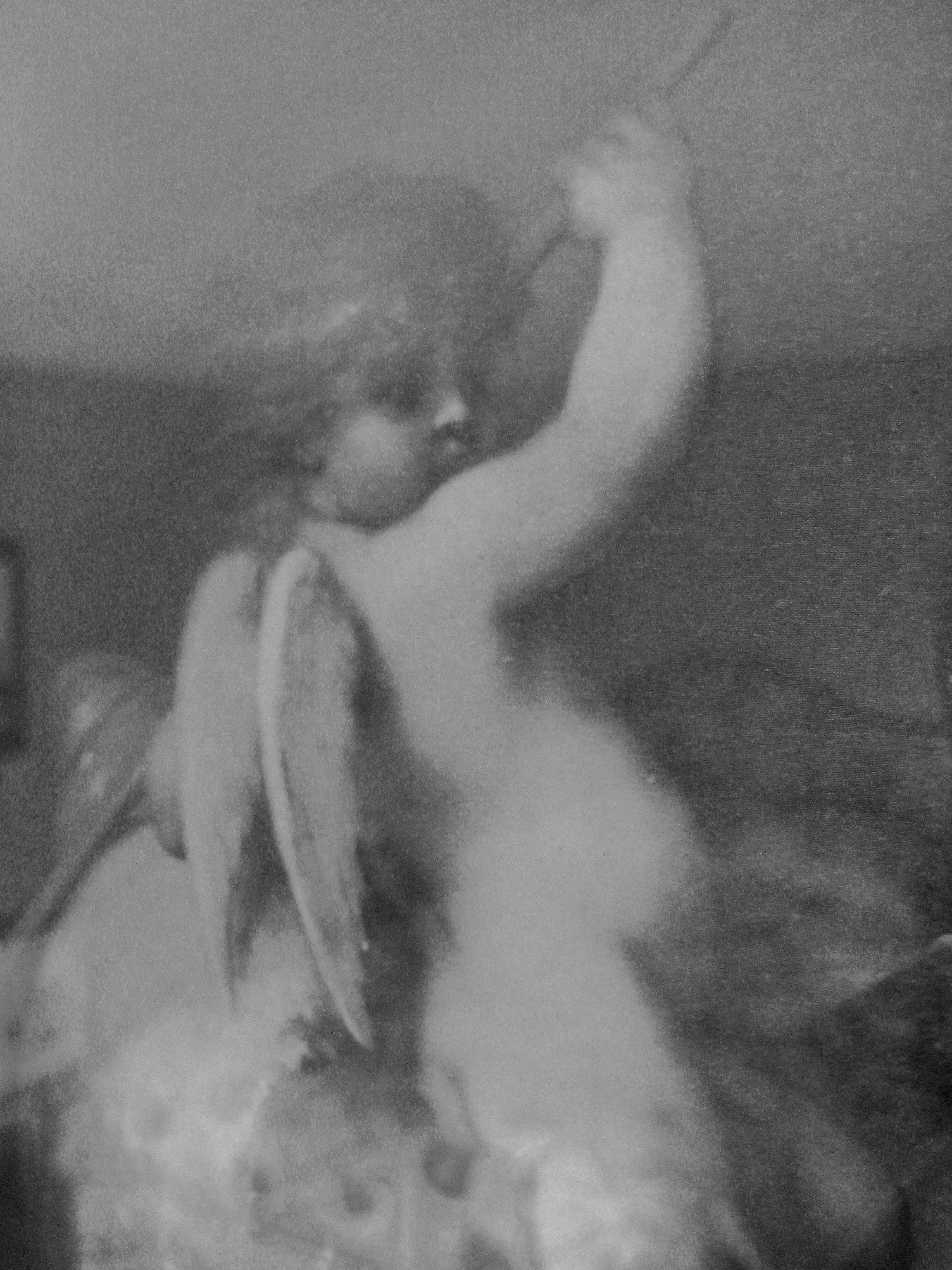
Innocence, in its purest form, is an affect found in youth. The emotional energy of innocence is expressed as a feeling of excited anticipation and joyful response as a child discovers and befriends a welcoming, magical world.

Innocence, pure and open, receptive... - Photo by Jan Ketchel
Innocence, pure and open, receptive…
– Photo by Jan Ketchel

Adults melt at the glitter in the eye and the spontaneous burst of laughter as the child greets new life for the first time. The innocent child is yet to be fettered with judgment, rejection, fear, cynicism, and shame. The innocent child’s wonder is open, receptive, and trusting that the world is loving and equally receptive to being met and played with.

Most adults collude to uphold a protected magical world for the young child that screens out the reality of disease, old age, and death. Thus a child’s innocence is encouraged to develop and strengthen, as adults know the precious value of a child’s innocence despite their knowing also of its inevitable loss as the deeper truths of life eventually intrude on this early paradise.

The New Testament Bible states: “Truly I tell you, anyone who will not receive the Kingdom of God like a child will never enter it.” (Mark 10:15)

This Biblical passage is abundantly clear: to restore oneself to the innocence of the child is the only key to entering heaven. If heaven is the destination after completion of our journeys in this world then innocence is the gold we must refine in this life to obtain entrance into our infinite journey.

Such a paradox this life! The child is born with the very innocence that life in this world will of necessity contaminate and yet, in order to progress, it must be retrieved and refined to the highest level to achieve the enlightenment to grow beyond this world.

Innocence, by design, is contaminated by the time and space parameters of this world. All whom the innocent child bonds with will eventually change, frustrate, disappoint, and die. This reality must eventuate in a loss of innocence as the child meets the dark side of life and then must submit to the adaptive armor against the pain of lost innocence and the inevitable longing it generates.

Finding balance in light and dark... - Photo by Chuck Ketchel
Finding balance in light and dark…
– Photo by Chuck Ketchel

Herein lies our true mission in this life, to pick up the remnants of our lost innocence and meld them into a highly refined innocence capable of living in the true nature of reality, in both its light and its dark sides.

In our earthly existence, the dark side of reality is that everything changes, everything dies, nothing is forever in an unchanged form. Try as we might to hold back change through grasping onto our attachments, they will be ripped away. And further, grasping onto a refusal to be hurt again is really just another attempt at holding onto an unchanging self.

The longing of lost innocence, sequestered to the shadows of a closed heart, will not be silenced by suppression or repression for very long. Eventually, it will erupt in consciousness, in impulsive acts, or by pulling us downward into its torment via a depression that demands an inner journey of recapitulation to resolve.

That recapitulation journey requires us to relive the experiences of our lives that once jarred and fragmented our innocence, to willingly re-experience the painful encounters that sent our shamed younger selves running for sanctuary.

What is most required during the recapitulation journey is that our adult/ego/parent selves stay fully present as the full emotional torment of those encounters, along with the confusions and misconceptions that shroud the original innocence, are relived.

This process of receiving with open arms and heart the broken pieces of lost innocence by the adult self is the internal alchemical oven of transformation. Full acceptance of the full truth of one’s self releases innocence from judgment but also aids its maturation. The truth is, for innocence to really return to the living personality it must broaden to the dual nature of time space reality and expand its level of tolerance for disappointments, endings, and the unexpected.

For innocence to journey into the unfathomable it must be able to flow with what is. And what is sometimes hurts. Refined innocence is not naive to this possibility and in its wisdom will choose, when it can, what influences to open to and those to avoid.

Nonetheless though, a journeyer is always aware that to remain open to the full adventure of real life necessitates openness to being caught off guard as we enter the unknown. However, rather than fragment in encounters with the unexpected, refined innocence owns the resilience of non-attachment. That is, non-attachment to outcome, to being offended, to things always remaining known and unchanging.

In recapitulation comes the opportunity for melding... - Photo by Jan Ketchel
With recapitulation comes the opportunity for mature melding…
– Photo by Jan Ketchel

With non-attachment and full engagement, refined innocence leads from the place of awe and unreserved compassion for all engaged in the miracle of being. Yes, refined innocence is indeed the key to the Kingdom.

Ultimately, our stay in this world is really to graduate from the School of Refined Innocence. With this graduate degree we obtain the passport, the necessary readiness, to embark on new and deeper journeys in infinity.

Studying for exams,

Chuck