Tag Archives: recapitulation

Chuck’s Place: Child Care

From whence does our ancient innocence come? - Photo by Jan Ketchel
From whence does our ancient innocence come?
– Photo by Jan Ketchel

The truth is, the child self is older than the adult self. We were all children first. Actually, to advance, the child self had to stay behind so that the adult self could mature.

The child self, who sought the safety and fulfillment of its fundamental survival, who sought unconditional love and acceptance, who sought the pure play of innocence and discovery, had to shut down, hold in, and separate from the seeds of its budding adult self that it launched, while it sank into dormancy, waiting for the day the adult might turn around and rediscover its roots in the purity and innocence of childhood again.

Often, that child self was neglected and traumatized and it secretly bears the weight and torment of its early experiences. Voluntarily, it broke away from consciousness, hiding in the dark so as not to disturb the forward movement of the adult self. Its only hope of redemption, its hidden contract, was that in the triggered moments of adulthood the adult self would come in search of the traumatized child self and lead it to the light of day and help it to become unburdened of its horror stories, terrors, and confusions.

Only the adult self can become the true parent self to its lost child self. Only the adult self can find its forgotten self. Only the adult self can stand with its younger self and bear witness to the full truth of its younger experiences and, in so doing, put them to rest. Only the adult self can free its imprisoned child self and merge its innocence into the play of adult life.

Too often, adults forget their childhoods and only know they don’t want to revisit that horrid period of life. As the child stays cloistered, however, life in adulthood is experienced as barren and lacking, and the adult self seeks to compensate for the lack of joy and freedom by indulging in the myriad of addictions available in adult life.

At other times, adults become parents and inadvertently project their forsaken child selves onto their own children, who they serve as if they were princes and princesses, unable to limit, so deep is the pain of their own forsaken inner children. Sometimes the inner children are projected onto pets or other helpless creatures of the world, whom the adult feels compulsively bound to nurture and save.

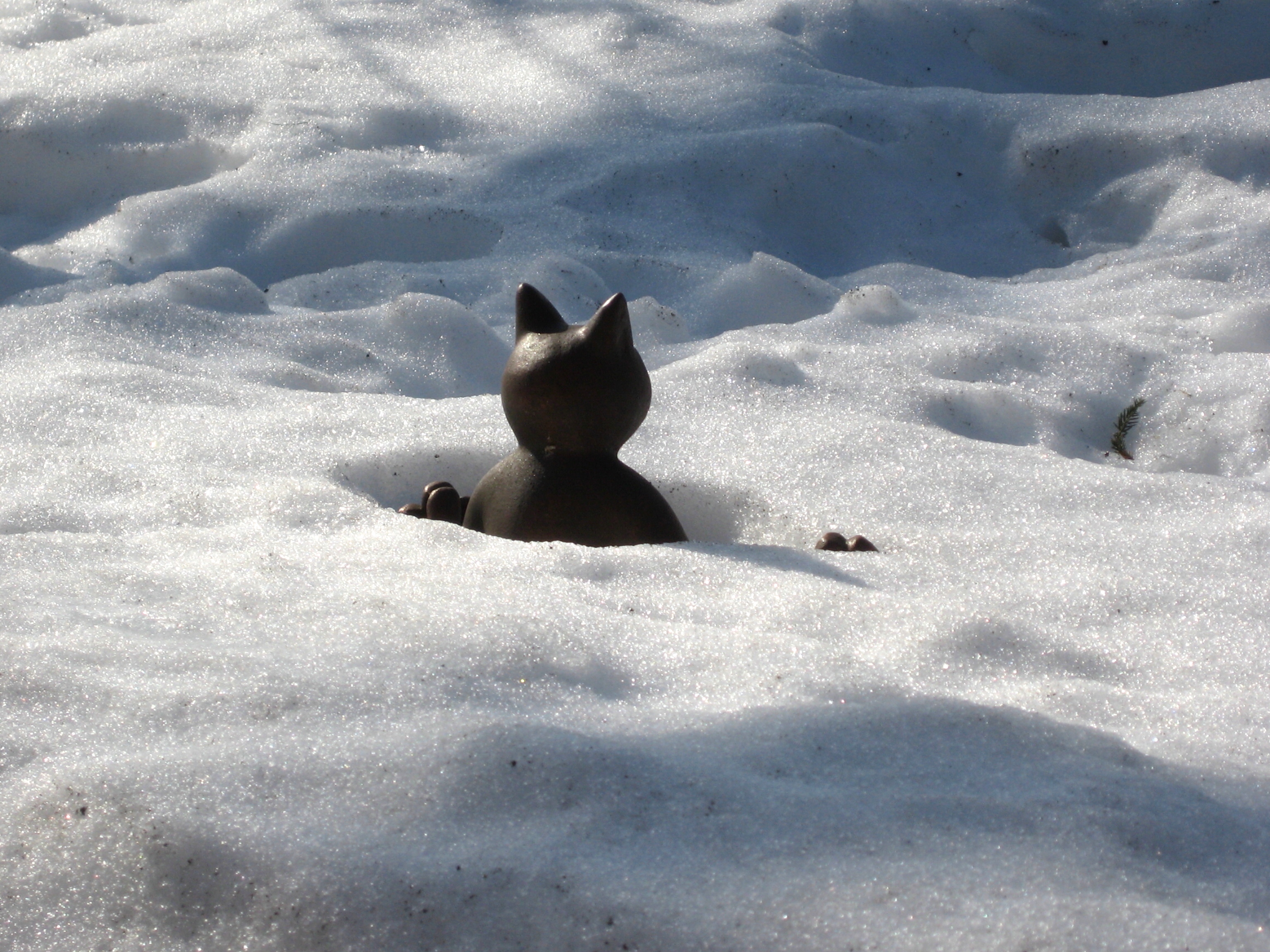
Oh, that sweet innocence! - Photo by Jan Ketchel
Oh, that sweet innocence!
– Photo by Jan Ketchel

If we come to the place of discovery of our own inner child, perhaps at first in dreams where our child tells us its secrets, we may be so appalled by the lack of care given and the hardships endured that we feel bound to serve and protect this wounded child at all costs. Young children do need parents to cater to their needs; its the core of survival. But they do also need parents that will listen to the truth, the whole truth of their experiences, and help them sort out the confusion of who is to blame and why things actually happened. Children may need to be helped to release their anger and sadness, and receive appropriate love and support.

But the truth is, our younger child self is much older than we are and may, in some way, be much wiser and more mature as well. After all, that warrior self already endured pain, suffering, neglect, perhaps even abuse and torture, things the adult self finds difficult to endure much less believe.

The child self does not need to be catered to or compensated for all that it had endured or lost. What it does need, however, is to be relieved of its burdens and its innocence to be welcomed into life.

Too often the adult self struggles with facing the pain, suffering and frustrated needs of the child self and tries to make a life for it where there is no pain or woundings. That’s impossible. As Buddha said, life is suffering. What the child self needs to know is that the adult self will not abandon it again, and that if there are woundings it will heal.

The solution is not to remain overprotective of the child self for the life it has lived, whereby cutting off the opportunity for joy in life, nor in overcompensating or catering to a child who suffered by making unrealistic promises or acting out its entitlement demands. The key to child care is a full recapitulation where the adult self stays present and hears the full truth of the childhood it once lived, ending the child’s isolation, validating its truths, releasing it from its frozen emotions and clarifying its beliefs.

During the recapitulation process the child self and the adult self learn to trust and feel safe with each other. They learn, no matter what is encountered or presented, that they can and will handle anything together in a nurturing and loving manner, without judgment or fear, unconditionally committed to a new and open relationship with each other. With that deep work done, the innocence of the child self merges with the maturity of the adult self and together they are not only ready to lead a new and fulfilling life, but fully open to experiencing all the joys and love that adulthood offers.

Perhaps the greatest challenge for the adult self is to encounter the pure innocence of the child self and to not succumb to a deep sadness and protectiveness that freezes the ability to bring that innocence into life. All innocence must experience the wounding of life outside the protectorate of the fairytale. For innocence to continue life in this world, it must grow to know about pain and suffering.

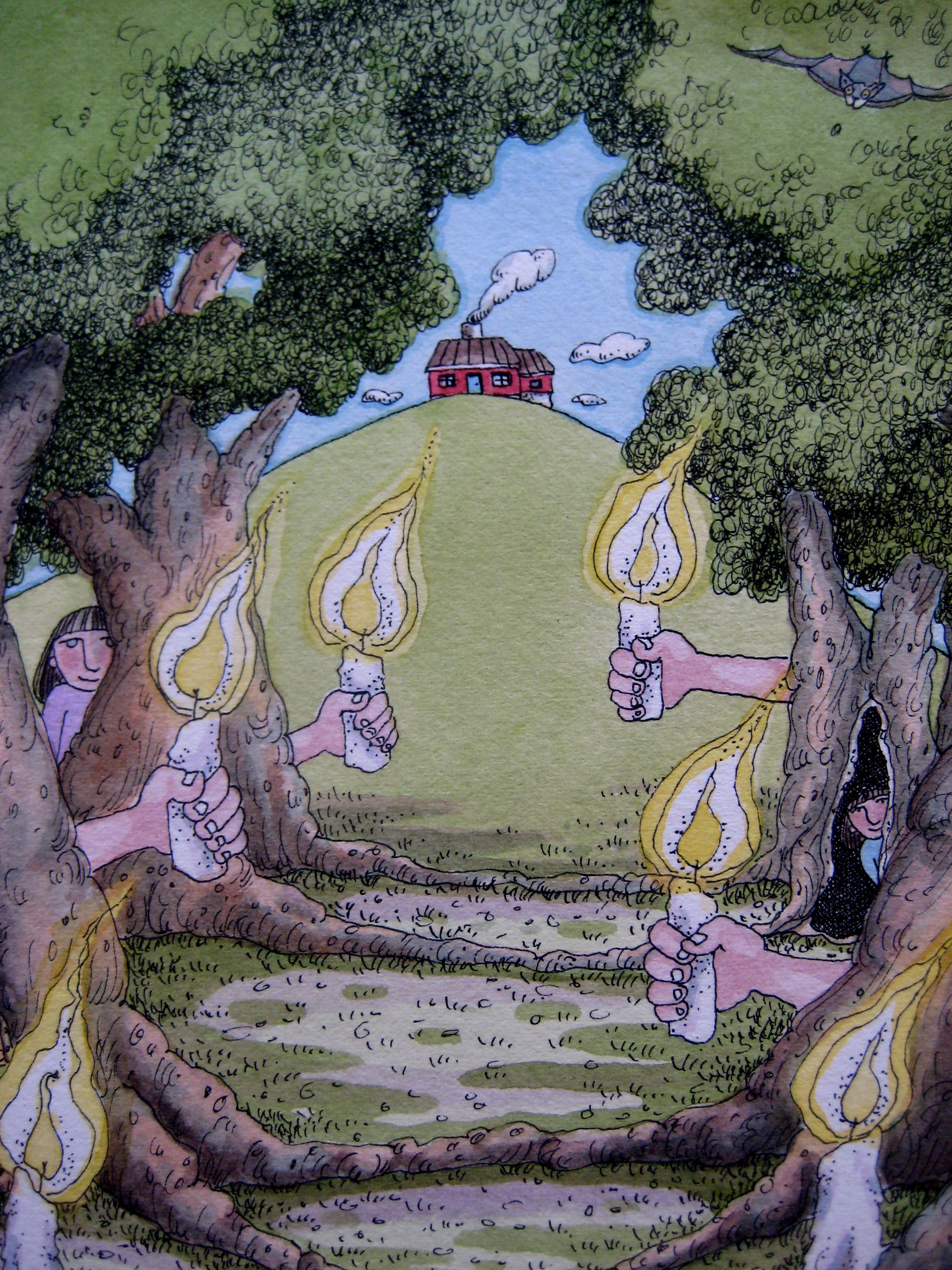
Resolution, acceptance, fulfillment... - Art by Jan Ketchel
Resolution, acceptance, fulfillment…
– Art by Jan Ketchel

Buddha’s father attempted to encase him in a painless magical kingdom, a fairytale world that he would never leave. Eventually, however, Buddha did go out into the real world and fully experience the woundings of the real world, as did Christ in his own ending on the cross. Nonetheless, it was through such woundings, and the ability to not get swallowed up by them, that each of these teachers eventually ascended to their spiritual enlightenment.

The path laid out for the adult self is to let our innocence out into this world and, through the trials and experiences in its human and spirit suffering, to find fulfillment in the enlightenment of the full human spiritual journey. This is true child care.

Deeply caring,
Chuck

Chuck’s Place: Journey To The Light

Are we ready to emerge from the bardos into the light? - Photo by Jan Ketchel
Are we ready to emerge from the bardos into the light?
– Photo by Jan Ketchel

This past weekend, as Jan and I immersed ourselves in Dr. Elmer Green’s The Ozawkie Book of the Dead, I wrote: “If we intend to live with abandon we must first fully relive with abandon.” This was in reaction to Elmer’s exposition of the depths of the subconscious that completely encloses us in the bardos* of our unrealized selves, unable to find our way to the light.

I was reminded of the many traumatized individuals I have known, through the years, who were unable to be helped by lamas in their Buddhist retreats to release attachment to the impact of their traumatic pasts through mindfulness training.

Though mindfulness can still the mind and the central nervous system, it cannot absolve one of the necessary energetic encounters with unprocessed traumatic experience dissociated in the body and the psyche.

I picked up A Path with Heart, by Jack Kornfield, off the bathroom library shelf and opened to the chapter entitled “Psychotherapy and Meditation” where Jack, the Buddhist monk, eloquently confirms my above observations.

The next morning, from the same shelf, I picked an obscure book that Jan had purchased some time ago, entitled Activation of Energy by Pierre Teilhard de Chardin, and opened to “The Place of Technology.” In this chapter de Chardin wrote, in 1947:

“…From the psychic point of view the earth would seem to be becoming progressively hotter, continually even more incandescent. If we consider not its harmony but its general intensity, the earth has never been through a phase to equal the present.” (p. 161)

At the crossroads, where we've been, where we're going, and what's next? - Photo by Jan Ketchel
At the crossroads,
where we’ve been, where we’re going,
and what’s next?
– Photo by Jan Ketchel

Contrary to the Sunshine State’s recent ban on DEP officials using the term “climate change,” the truth is, global warming has us heated to a phase unequal to the past. And we find ourselves at an evolutionary crossroads as a result; the heat is boiling over everywhere. The challenge, as de Chardin describes, is for the light of consciousness to fully take charge of evolution now. But how will we bring light to the earth?

Last week, Netanyahu delivered an unprecedented speech to Congress, breaking ranks with all diplomacy as he anxiously expressed his unwavering position: Iran can never be trusted, ever. Don’t make a deal.

Obama responded to Netanyahu’s speech, saying that he heard no new ideas or solutions with this stay-the-course approach. In fact, the rise of terrorism throughout the world appears to be fueled in large measure by the powerlessness of this stalemate.

The other day, 47 Republican Senators wrote a letter to Iran warning that regardless of Obama’s negotiations regarding a nuclear arms agreement, Congress would undo any agreement when he left office. Some view this unprecedented behavior by the Senate as treason.

The heating up of politics and international tensions is part and parcel of the growing charge to humankind to shed truthful light on its problems and find solutions based on right action. There is no great God gonna come from the sky and make everything all right.

We are charged, just as we are in recapitulation, to find our way through the hazy bardos of our largely subconscious planet. In de Chardin’s first essay in Activation of Energy, “The Moment of Choice,” written at Christmas 1939 on the eve of World War II, he states:

“This will be the second time, then, in the span of one human life that we shall have known War. The second time, did I say? Is it not, rather, worse than that? Is it not the same Great War [WWI] that is still raging, the same single process: a world being re-cast — or disintegrating? (p. 13)

Well, here we are again. It’s not a new war; it’s a continuation of the same disintegrating process, heating up evermore powerfully, begging us to recapitulate, to face all the horrors and all the truths of our choices and behaviors since we took over the wheel, since we ate the apple in the garden from the tree of knowledge. We’ve been driving ever since and look where it has gotten us!

Are we going to wait until it's too late? - Photo by Jan Ketchel
Are we going to wait until it’s too late?
– Photo by Jan Ketchel

Unless we face ourselves and act in the light of truth and consciousness the globe will continue to heat up under the stewardship of the dark side: greed and self-interest.

Yes, there are guides, angels, bodhisattvas, masters, all dedicated to helping us find our way to union with that light, but none of those entities can lift us out of the bardos into the light. We must boil in our bardos and free ourselves before we can benefit from such guidance. Channels broadcast messages everywhere, but do we listen? Can we listen? On what are we satiated?

When I posed these issues to the I Ching yesterday, I received hexagram #27 The Corners of the Mouth (Providing Nourishment). This hexagram is a picture of an open mouth. The real crux of the issue is, what will we put into our mouths and what words will come out of our mouths?

The bottom three lines of the hexagram refer to actions that seek nourishment for oneself alone: actions of greed. The top three refer to nourishment for others: compassion.

I received the six in the fourth place. Here the I Ching states: “…this line refers to one occupying a high position and striving to let his light shine forth. To do this he needs helpers, because he cannot attain his lofty aim alone. With the greed of a hungry tiger he is on the lookout for the right people. Since he is not working for himself but for the good of all, there is no wrong in such zeal.” (p. 110 Wilhelm translation.) The guidance here: turn the hunger of greed toward the light; bite through to the truth.

I also got the nine at the top. Here the I Ching states: “This describes a sage of the highest order, from whom emanate all influences that provide nourishment for others. Such a position brings with it heavy responsibility. If he remains conscious of this fact, he has good fortune and may confidently undertake even great and difficult labors, such as crossing the great water. These undertakings bring general happiness for him and for all others.” (pp. 110-11)

The guidance here makes it pretty clear that it’s time to do the right thing, to take full responsibility and cross the waters of our personal recapitulations just as the world, as a collective unit, must face the truths of the choices of its human nature and compassionately right the course.

Eventually we come into the light... - Photo by Jan Ketchel
Eventually we come into the light…
– Photo by Jan Ketchel

There are no saviors. We are the saviors. We’ve been charged with using our heated up planet, to use its light to make things right, deepening its journey into the light.

Journeying into the light,
Chuck

* Bardos refers to the Tibetan after-death bardo states, but is intentionally used in a broader context to suggest that we are in the bardos all the time, in a confusing state of disorientation that we must come to terms with (e.g. in recapitulation) so we can proceed into new life and higher realms of consciousness.

Chuck’s Place: Love & Laughter—Tools Of Detachment

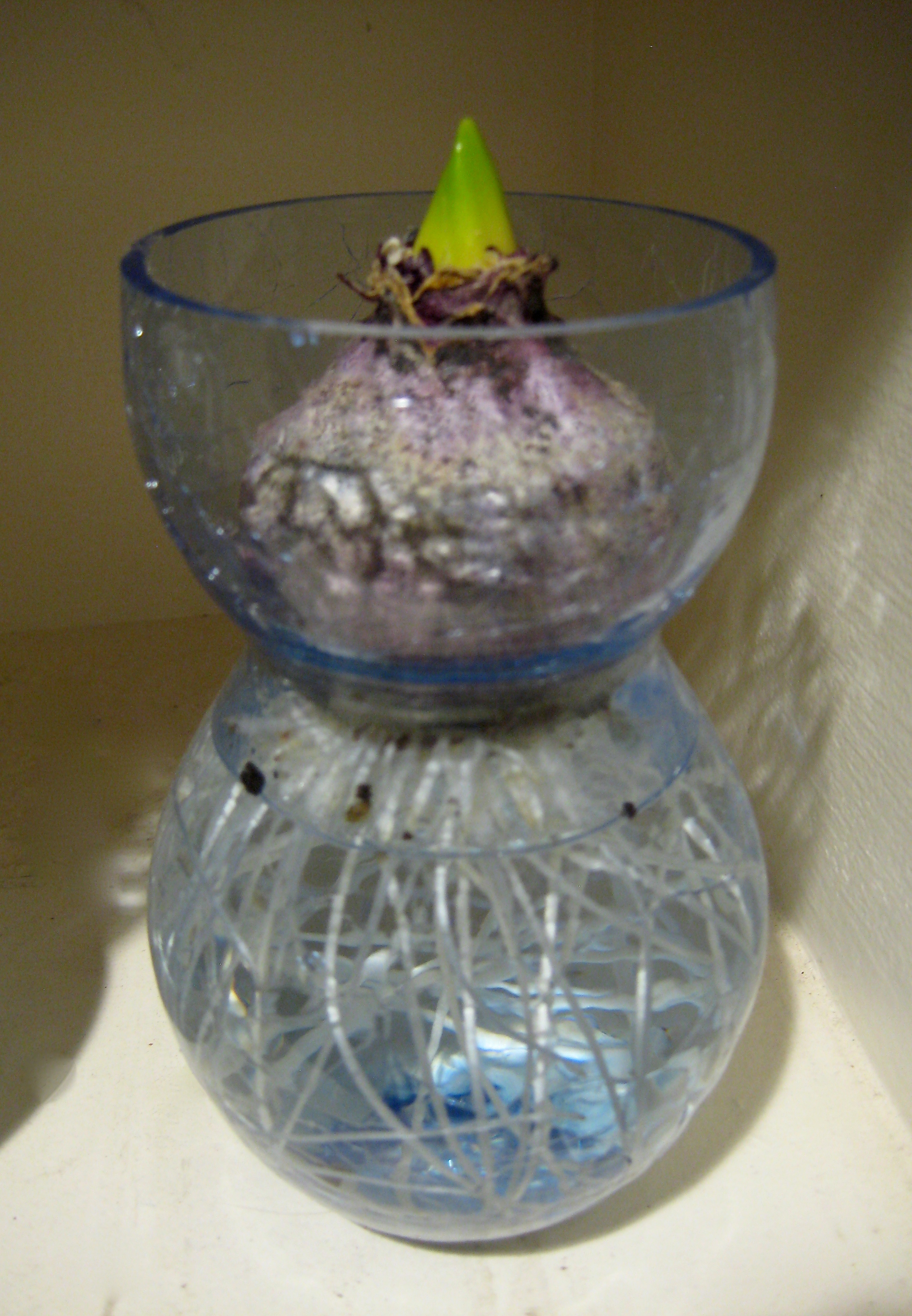
Incredible lightness of being... waiting to be freed... - Photo by Chuck Ketchel
Incredible lightness of being…
waiting to be freed…
– Photo by Chuck Ketchel

If we understand karma to be unfinished business, that which grounds our flight, then we can understand detachment as the necessary tool to free our incredible lightness of being to find fulfillment in this life and beyond. Detachment unhitches us from the energetic drains that keep us tied to people and situations that impede our freedom. Energetic drains take the form of intense emotional attachments, be they fear and hate or, quite the opposite, unrequited love. Either way, attachments keep us tethered, and, until released, we cannot journey deeper into life.

But what are the nuts and bolts of detachment? Often enough, Jan and I write about the formal process of recapitulation to free and reclaim all the entangled energy knotted in the lives we’ve lived. Love and laughter are tools at the heart of the recapitulation journey.

Prior to his assassination, Gandhi had expressed, “Even if I am killed, I will not give up repeating the names Ram and Rahim, which mean to me the same God. With these names on my lips, I will die cheerfully.” He also said, “If I am to die by the bullet of a madman, I must do so smiling. There must be no anger within me. God must be in my heart and on my lips.”

Rahim also means compassion. When Gandhi was actually assassinated, he raised his hands in front of him, in a common gesture of greeting to his assassin. And he did call out to God, according to some accounts, speaking the words “Ram, Ram.” In speaking these words, and with this final gesture, Gandhi forgave his assassin, leaving this world completely untethered to what his assassin had done to him, but also thanking the man for delivering him to the next stop on his journey.

Jesus similarly cried out to God while on the cross, “Father, forgive them, for they know not what they do.” He also left this world completely untethered to his accusers, who delivered him to his future.

From wherever we come, we land; we move into life on this earth. It’s where we are now. If we turn around we turn to stone and can move no further, according to a common concept. Recapitulation, however, requires us to turn around, but with the intent of removing all the energetic strings that keep us bound in regret, anger, sadness, longing, and hate. In retrieving these energetic strings of self, we can turn to the unfolding awesomeness of continuing our journey untethered.

Buddhist wisdom guides all who leave this world to glance only briefly at the bardos of their discontent and stay focused on the light. To remain attached to the emotional ties of our life, loving or traumatic, forms the seeds of our karma and interrupts our journey to spiritual wholeness and enlightenment. Gandhi was well aware of this, as he faced his assassin in the common greeting of respect, namaste, meaning “I bow to you; I bow to the God within you.”

We all travel in and out of the light and the dark all the time... - Photo by Jan Ketchel
We all travel in and out of the light and the dark all the time…
– Photo by Jan Ketchel

To release emotional attachment to those who harm us frees our karmic load. We are then freed to proceed into new life unburdened by emotional heaviness. Karmic attachment requires us to stay put, until we can free our spirits to move into new life.

The love or compassion that Gandhi and Jesus portrayed transcends the attachments we have to our lives, interrupted as they are by our assassins. Instead, it accepts the reality of our unexpected launching into a different journey. Those that launch us must then grapple with their own karma—for the choice made to act from the dark side. We can extend the love of compassion to them, as they continue their journeys into that karma, and appreciate our own opportunity to free ourselves, at their hand, from attachment to the dark side that would have us stew in powerful emotions. If we look instead to the dark side and send it love—the last thing it wants—it releases its talons from our light being.

Laughter, like love, is equally freeing of energetic bindings. The Shamans of Ancient Mexico discovered that the greatest hook to our energetic selves from the dark side is self-importance. When we are offended by another, or by life circumstances, we are drawn to the seriousness of anger, pain, and resentment. These emotions, though transiently valid and necessary to encounter during recapitulation, are equally capable of keeping us attached to the dark side, for the dark side looks for ways to hook us, to entrap us indefinitely by feeding on the energy of our fixated, negative emotions. We can completely break the chains of these offenses by learning to laugh at ourselves.

We can laugh at our attachment to seriousness. We can laugh at our own human frailty. We can laugh at our tendency to judge the self and other. And we can laugh at the frailty and foolishness of others. If we can find our way to the divine comedy of self and other, we are freed of all karma associated with the injustices we have engaged in and those that have been foist upon us—however serious!

Can we learn to laugh at our predicaments? - Photo by Jan Ketchel
Can we learn to laugh at our predicaments?
– Photo by Jan Ketchel

Love and laugher are powerful tools that, when genuinely engaged in, free us from the binding attachments that tether our fulfillment to our karmic lives. As we exercise these powerful tools, we offer ourselves the opportunity for new and different outcomes. Love and laugh! Try it, and see what happens!

Loving and laughing,
Chuck

Chuck’s Place: Alzheimer’s & The Journey Of The Soul

Who knows what we will encounter as we take our first steps into the bardos... - Photo by Jan Ketchel
Who knows what we will encounter as we take our first steps into the bardos…
– Photo by Jan Ketchel

The rational sensibility of the modern world observes the deterioration of the brain with Alzheimer’s disease and questions the validity of the soul. In effect, it asks the question, “What is left to ascend after death, when clearly there appears to be a total dismantling of the personality as the disease progresses?”

All religious systems, nonetheless, propose that a soul, an ethereal essence, separates from the body and continues to live after death. Hindu scientists have an elaborate understanding of the composition of that soul, or what they have termed the astral body. According to their findings, our abilities to think and feel originate in the astral body. The astral body, or soul, is intimately connected with the physical body; feelings are experienced in physical sensations and mental processes are connected with the brain. These two bodies, physical and astral, are inseparable except in dreaming, shamanic journeying, and in severe trauma, when the astral body—though still attached to the physical body—separates and goes off on its own journey.

Shamans utilize dreaming and journeying to explore life beyond the body, as they prepare for life after death, for the moment when the astral body completely separates from the physical body.

The Tibetan Buddhists, as outlined in The Tibetan Book of Living and Dying, have identified several bardos, or in-between worlds, that all humans encounter shortly after death. In the bardos we are all confronted with unresolved issues from our lives. Our ability to resolve, or not attach to these issues in the bardo states allows us to progress deeper into our soul’s unfolding journey in infinity. However, this cosmic recapitulation process in the bardos may require many lifetimes before we achieve true freedom. Alzheimer’s, as I see it, is the beginning of that cosmic bardo adventure, begun while still living in the human body, offering the opportunity to engage in recapitulation.

With the deterioration of the brain during Alzheimer’s, the astral body is freed to enter the bardos and deal with deep issues, as it is freed of engagement in the affairs of daily life. Deterioration of personality in this world in no way reflects loss of self, it simply reflects a breakdown of cognitive functioning connected to the physical body.

Things may clarify the deeper we go... - Photo by Jan Ketchel
Things may clarify the deeper we go…
– Photo by Jan Ketchel

The mental and emotional self is fully present in its astral travels and is deeply engaged in working through karmic issues with souls from other lives, as well as those who have already crossed over, whom one was associated with in this life. Alzheimer’s offers an individual an extended opportunity, while still in human form, to resolve issues of many lives, with the added benefit of possibly breezing through the bardos after real death, moving quickly into higher spiritual realms. What appears in physical form as a difficult to manage and heartbreaking pathological disease, in spiritual form is actually an opportunity for great healing and advancement.

Relatives of Alzheimer’s patients are often treated to stories of these adventures in the bardos when the Alzheimer’s traveler is in lucid moments. He or she may speak of adventures with relatives and other beings in the astral realm. And, yes, some of those encounters with entities in the bardos realm can be quite terrifying, as patients might report their terror at feeling robbed or attacked, or having met evil or monstrous beings.

Nonetheless, if we can value their experiences as coming from layers of reality that we are unable to witness, rather than simply dismissing them as hallucinations, we might be granted glimpses of life beyond life. Not only are we offered valuable insight into what we will all one day encounter as we enter the bardos ourselves, but we are able to support our loved ones as they deepen their soul’s journey in infinity, preparing for their final launching.

Is Alzheimer's seeding new life? - Photo by Jan Ketchel
Is Alzheimer’s seeding new life?
– Photo by Jan Ketchel

Looking at Alzheimer’s from a different perspective,
Chuck

I wish to thank Elmer Green, PhD, brain researcher and pioneer of biofeedback, for his insight into Alzheimer’s as he took the journey with his wife, Alyce, learning what she was encountering on her trips into the bardos. You can hear him talk about it here: The Ozawkie Book of the Dead He mentions his findings about Alzheimer’s within the first few minutes and goes into it in greater detail throughout the recording. It’s well worth listening to!

A Day in a Life: Patient Waiting

From inside the tunnel of self... - Photo by Jan Ketchel
From inside the tunnel of self…
– Photo by Jan Ketchel

Shortly after I finished college and went to live in Sweden, long suppressed memories began to stir. They came in short bursts, most often as dissociative states. I would suddenly retreat from the world, tunneling down into myself, where I’d view the world as if from inside a telescope.

Such moments could last for a few minutes to a few hours. I had no idea why they happened, but there was something incredibly familiar about them, though fuller memories of my childhood sexual abuse were not to surface for decades. I had never heard of recapitulation nor was I seeing a therapist at the time, but there was a deeper part of me that knew that one day both of those things would become central to my existence.

It was also about that time that I had the clear insight that one day I would have to retreat into a cabin of my own, as I thought of it, and do the deeper inner work that I sensed would one day be necessary.

To combat those disturbing moments of dissociation, I began keeping a list of all the things I would take with me into my cabin. I planned to go for a long time, a year or more. I made lists of foods, water, personal supplies, how much of each I’d need. I made lists of art supplies and writing implements, clothing, bedding, batteries, pots and pans, etc. My cabin was heated by a wood stove, so I stacked wood outside the walls, lining it several feet deep, both for lighting fires as well as insulation during the coldest months. I expected that I would be buried under several feet of snow for months on end, it was Sweden after all.

The lists were long. I’d check them over and over again, adding new things, deleting others that seemed unnecessary. I tried to think of every item I would need and every circumstance I would encounter. I wanted to be sure that I had not forgotten one thing that I would need in my isolated cabin. Whether my imaginings were practical or not didn’t matter; it was a deeper part of me that was making the plans.

Here is the cabin on the mountaintop that I envisioned for myself and drew and painted over and over again... - Detail from painting by Jan Ketchel, 1979
Here is the cabin on the mountaintop that I envisioned for myself and drew and painted over and over again…
– Detail from painting by Jan Ketchel, 1979

My cabin planning became an art piece. I worked on it for months, drawing floor plans, exterior views, picking the perfect mountaintop spot with beautiful views, incorporating it into all my other art works for years to come, getting it just right. Putting the final touches on it, I put it away, for I knew it was not going to become an actuality, at least not then. I would have to wait for the right time, because I was certain that someday I would be going into a cabin of my own, that I would be there for a long time. Once there, I knew I would be ready to finally face my demons, all that tortured and plagued me.

Little did I know that, in a sense, my mental planning would one day prove useful, though the entry into my cabin took a far different route from my early imaginings. In the planning stage, I was establishing a real cabin, but in the reality of my recapitulation, many decades later, I entered a metaphorical cabin, as I personally became the cabin. My own body housed me, protected me, nourished and supported me throughout the three years of my inner journey. It contained everything I needed to do my recapitulation. And just as I had imagined, I did finally face all that had stirred back when I was just a young woman starting out in life. Though I had been granted a taste of what was to come, little did I realize just what it would mean or where it would take me.

I am struck now by the patience of my young self. I seemed to know that when things are ready, they will come. It was a valuable lesson, one that I relearned many times as my recapitulation unfolded. Often I would want to push the process, get it over with as quickly as possible. I remember one day saying to Chuck, “Why don’t we just spend a whole day doing the recapitulation and get it over with once and for all.” Ha! Little did I know that it doesn’t work that way.

There was no point in pushing. Pushing, I learned, only created unnecessary tension and anxiety. Far better to wait. The recapitulations, the memories, came on their own. I didn’t actually have to do anything to trigger them. I had to learn to be available, recognize that I was being prompted, and take the journey that was offered, because that’s what I was being taken on, a journey. My job, if I was to truly get through the memories as quickly as possible, was to consciously let them go through me, in whatever form they came, and learn what I needed to learn from them, both what they offered me in childhood and what they came to teach me again as an adult.

I even envisioned a future happy self! - Detail from a painting by Jan Ketchel, 1979
I even envisioned a future happy self!
– Detail from a painting by Jan Ketchel, 1979

The recapitulation process was invaluable. Painful as it was, I would not trade it for anything. It was the journey my spirit was setting up for me so long ago, letting me know that one day I would indeed be going into a cabin of my own. I just had to wait for the right time, the time when I was ready.

The lesson of patient waiting can be applied to other areas of life as well. If we want something and push for it, it might backfire on us. It might not be the right time or be the right thing for us. But if we wait, if it’s right, it will come and we will be ready for it. This I know.

From my cabin,
Jan